AI Receptionist for Dental Clinics: The New-Patient Calls Your Front Desk Never Picks Up
Your front desk answers maybe half the calls on a busy day. An AI receptionist for dental clinics covers the overflow and after-hours calls you never see, the new patients quietly booking somewhere else.
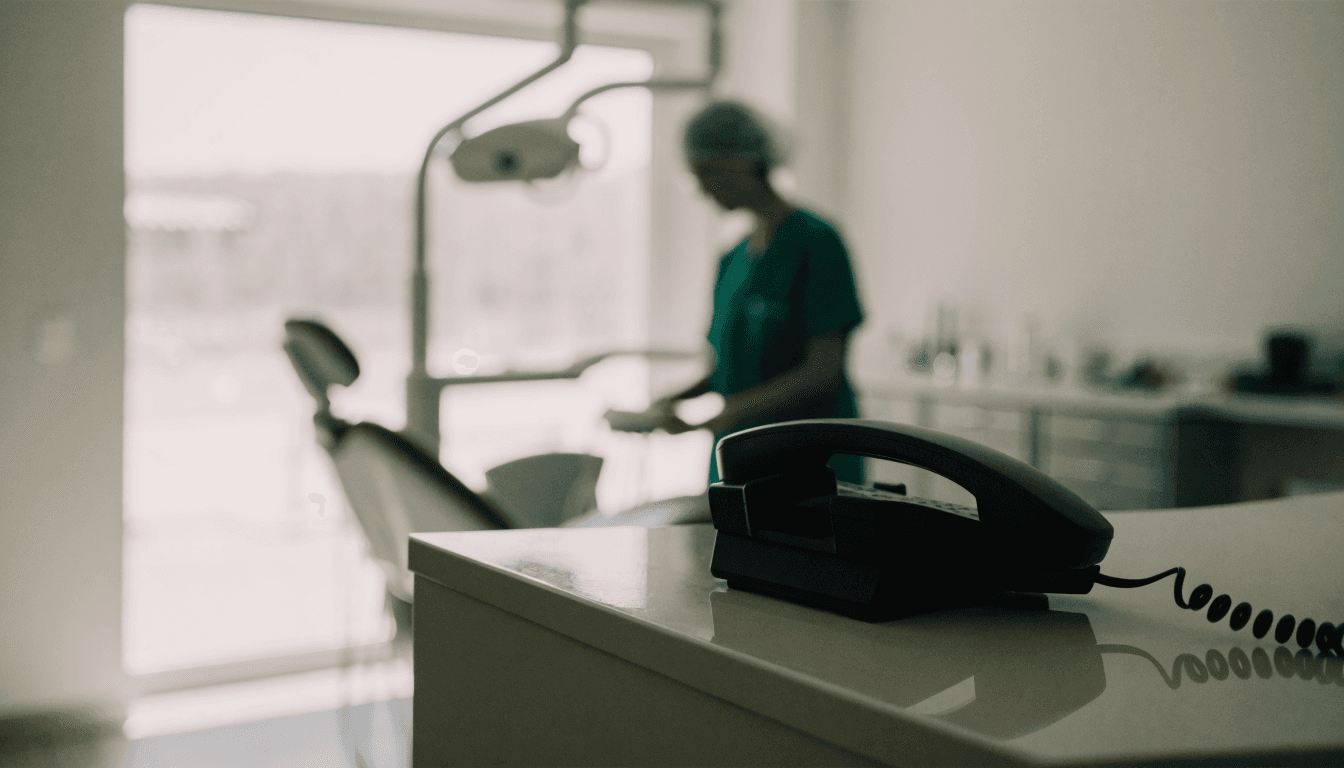
A dental office manager I worked with told me her front desk answers the phone maybe half the time on a busy day. Not because the team is slacking. Because at 10am there are two patients checking in, someone on hold with an insurer, and a hygienist asking where the next chart went. The phone is the fourth priority in a room built for three.
So it rings out. And the caller, a new patient with tooth pain who was ready to book, dials the next practice on the search page.
An AI receptionist for dental clinics is a voice agent that answers every inbound call, day or night, books appointments straight into your practice management software, fields the usual insurance-and-hours questions, and passes real emergencies to your on-call line. It picks up on the first ring at exactly the moments your front desk can't.
The number your front desk can't see
Here's the stat that should bother you. Around a third of calls to dental practices go unanswered during normal business hours, and that climbs past half when the waiting room is full. One 2026 roundup of dental phone data pegs the unanswered rate near 35%.
What happens next is worse. When a caller can't get through, roughly two in three won't leave a message or try again. They call a different office. Practice-side analysis says the same thing: the voicemail box is where new patients go to disappear, because most people hang up rather than record one.
Now attach a dollar figure. A single new dental patient is worth somewhere between $15,000 and $25,000 over the life of the relationship. Miss a handful of those a month and you aren't losing calls. You're losing a second operatory's worth of production.
If you want the full cost picture, we broke the three-bucket math down in our AI receptionist ROI post, and the wider numbers live in our 2026 statistics roundup.
What actually breaks at a dental front desk
It's rarely one thing. It's overflow during check-in rushes. It's the lunch hour when the desk is covered by one person, or nobody. It's evenings and weekends, when a cracked filling doesn't wait politely for Monday. And it's the slow reactivation calls to lapsed patients that never get made, because answering the live line always wins.
What most practices get wrong
Most owners think the fix is answer more calls. It isn't. Your team already answers the calls they can physically reach. The gap is the calls that arrive when every human is busy or gone. That's an overflow-and-after-hours problem, not a hustle problem.
Hiring another front-desk person buys you about 40 hours of coverage for a phone that rings across 168. An AI receptionist covers the other 128 without a salary, a lunch break, or a sick day. That's the part the staffing conversation keeps missing.
What it should actually do in a dental clinic
Generic call-answering isn't enough for dental. The bar is higher. Here's what I'd expect from a serious setup:
- Book, reschedule, and cancel directly in your PMS, whether that's Dentrix, Open Dental, or Eaglesoft, instead of just taking a message.
- Answer the boring-but-common questions: hours, location, parking, which insurance you take, whether you see kids.
- Screen true emergencies and route them to your on-call dentist rather than booking a broken tooth three weeks out.
- Capture new-patient details cleanly: name, callback number, reason for the visit, insurance, so the morning huddle isn't guesswork.
- Absorb overflow, so a call that would've gone to voicemail gets answered on the first ring while your team finishes checking someone in.
- Make the recall and reactivation calls your desk never gets around to.
The HIPAA question, answered plainly
Any voice agent touching patient information in a US dental practice has to run under a business associate agreement, with call data encrypted and access controlled. Ask any vendor for their BAA before you send a single call their way. If they get cagey about it, that's your answer. We sign one as standard. Patient data on a dental line isn't optional territory.
What it won't do, and why that's fine
It won't clean teeth, read an X-ray, or replace a warm front-desk lead who knows your regulars by name. It isn't meant to. Point it at the calls you're already losing, the overflow, the after-hours, the reactivation, and let your people do the work only people can do. The goal isn't to remove your front desk. It's to stop paying for missed calls you never see.
Across the dental and service lines we run, a real share of booked appointments come in outside nine-to-five: evenings, early mornings, the odd Sunday. Those are appointments that simply weren't being captured before, because nobody was on the phone to catch them.
Frequently asked questions
How much does an AI receptionist for a dental clinic cost?
Less than the calls it recovers, most of the time. Expect a few hundred dollars a month depending on volume, comfortably under a part-time desk hire. Weigh it against one saved new patient and it isn't close. See current pricing.
Will it integrate with my practice management software?
Usually yes, through booking and calendar integrations with systems like Dentrix, Open Dental, and Eaglesoft. Where a native hook doesn't exist, it captures the appointment details and hands them to your desk in a clean format instead of a scribbled sticky note.
Can patients tell they're talking to AI?
Some can, most don't mind once it books them in under a minute. The honest test isn't whether it fools anyone. It's whether the call ends with an appointment instead of a voicemail beep.
Is it HIPAA compliant?
Only if the vendor signs a BAA and encrypts call data. That's the whole test. Ask for it in writing before you route a real patient call.
What happens with a dental emergency after hours?
A good setup screens for urgency and routes genuine emergencies straight to your on-call line. Routine requests get booked into the next open slot, so your morning isn't a pile of callbacks.
How long does it take to set up?
Days, not months. You can run a 15-day free trial pointed at overflow and after-hours calls before you commit to anything.
Does it replace my front desk?
No. It covers the overflow and the hours nobody's there. Your team keeps doing the relationship work that actually retains patients.
The next step
If your practice is missing even a handful of new-patient calls a week, the cheapest experiment you can run is handing the phone to something that never goes to lunch. Try it on a 15-day free trial, point it at your after-hours and overflow calls, and count the appointments that show up that wouldn't have otherwise. Book a demo when you want to see it on your own line.
Sources: AgentZap, dental practice phone statistics; Peerlogic, turning missed dental phone calls into profit.