AI Receptionist for HVAC: Stop Losing Jobs to Your Voicemail
How an AI receptionist for HVAC contractors answers every call, books jobs into your dispatch calendar, and stops the missed-call revenue leak that gets worse every heat wave.
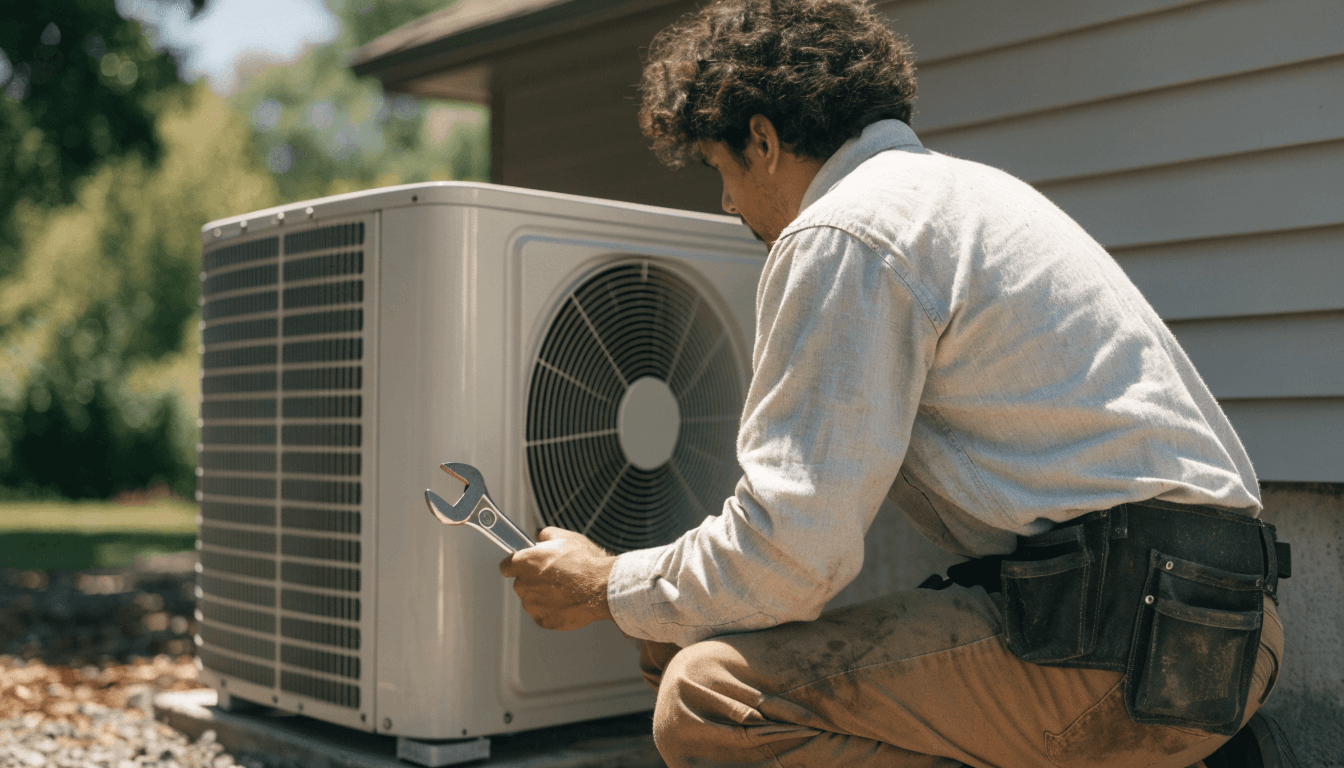
A HVAC owner in Phoenix told me his phone rang about 40 times on the first 110-degree day of last summer. He booked nine jobs. The other thirty-one calls went to voicemail, got a callback that came too late, or reached a customer who'd already dialed the next company on Google. That's not a staffing problem. It's arithmetic, and it gets worse every heat wave.
Quick answer: an AI receptionist for HVAC answers every call in one ring, day or night, books the job straight into your calendar, and flags true emergencies for a fast callback. For most contractors it costs less than one missed install and pays for itself the first busy week. No hold music, no lost lead.
The number nobody at the office wants to say out loud
Here's the uncomfortable part. The average HVAC contractor lets roughly a quarter of inbound calls go unanswered, and in peak season that climbs past a third, according to industry phone data. Put a dollar figure on it: a single missed service call in this trade is worth somewhere around $350 before you count the maintenance plan or the eventual system replacement.
And the caller doesn't wait around. Most people who hit voicemail on a home-services line never ring back — the majority just call a competitor. So a missed call isn't a delayed job. It's a job you handed to the shop across town, for free.
Run those numbers against a shop doing 100 calls a week and it adds up to real money walking out the door every month. Nobody puts that line item on the P&L, which is exactly why it never gets fixed.
Here's what most HVAC owners get wrong
When the missed-call problem finally stings, the first reflex is to hire an answering service or a call center. I get the instinct. It's also the wrong fix for most shops.
A generic answering service takes a message. It doesn't know your service area, your dispatch rules, or whether the caller needs a same-day repair or a quote on a new condenser. So the message lands in an inbox, someone calls back an hour later, and the customer has already booked elsewhere. You paid to slow down your own follow-up.
Message-taking and booking are not the same job. The whole point is to close the loop while the caller is still on the line.
What an AI receptionist actually does on an HVAC line
Think of it as a front-desk person who never sleeps, never takes lunch, and picks up on the first ring even when twelve people call at once. On a live HVAC call it will:
- Answer instantly and greet the caller with your company name, not a hold queue.
- Figure out what they need: a no-cool repair, a tune-up, or a replacement quote.
- Check your live calendar and book the slot, then capture the address, system type, and how urgent it is.
- Spot a real emergency — no heat in January, a gas smell — and route it to your on-call tech instead of parking it till morning.
- Text the customer a confirmation so the appointment actually sticks.
Across the HVAC accounts we've set up, the pattern is the same: the calls that used to die after 6pm are the ones now filling next morning's schedule.
The seasonality trap it gets you out of
HVAC demand isn't flat and you know it. The phone is dead in October and on fire in July. Staffing a front desk for the July peak means paying for idle hands in the shoulder months; staffing for the average means drowning when the first heat wave hits.
An AI receptionist doesn't care if it's one call or fifty at the same second. It scales to the weather. You stop hiring and firing seasonal help just to answer a phone. Here's how our AI receptionist handles dispatch and scales with the weather.
What it costs versus what you're already losing
This is where the decision gets easy. A done-for-you AI receptionist runs on flat monthly pricing that's a fraction of a front-desk salary — and usually less than the value of one job you'd otherwise miss. If you want the full breakdown on payback, I laid out the honest ROI math here.
Not every platform is built for a trades business, so shop carefully. I compared the main options — the done-for-you tools versus the developer kits — in this platform comparison. The short version: if you don't have an engineer on staff, you want something that's live the same day, not an API you have to assemble.
Getting one live without stopping the trucks
Setup is less work than most owners expect. You pick a receptionist template, load your services, service area and pricing, connect your phone number and calendar, and go live. Most shops are running the same afternoon they start. AI Placers speaks 50+ languages and handles unlimited simultaneous calls, so the heat-wave spike stops being a crisis.
The fastest way to judge it is to hear it. Book a demo and have the AI Placers receptionist call you, or start the free trial and point it at your own line for a week. If you can tell it's an AI in the first half-minute, it's not ready for your customers and you shouldn't buy it.
FAQ
Can an AI receptionist book HVAC jobs into my dispatch software?
Yes. It checks live availability and books straight into your calendar or dispatch system, captures the address and system type, and texts a confirmation. If a tool only takes a message, it's an answering service, not a receptionist.
Will my customers know it's an AI?
Most won't. It answers in one ring, holds a normal back-and-forth, and books the job. If a caller can tell it's a robot in the first 30 seconds, the platform isn't good enough — that's your buying test.
What happens with a no-heat emergency at 2am?
You set the rules. The receptionist triages the call, flags a genuine emergency, and either gives your after-hours instructions or fires an urgent alert to your phone so a real person rings back fast.
How much does an AI receptionist for HVAC cost?
Flat monthly pricing that lands well under a front-desk salary and usually below the value of a single missed install. AI Placers starts at $199/month, billed per booked job rather than per minute, and opens with a free two-week proof-of-concept so you can prove it on your own calls first.
Can it handle a spike during a heat wave?
That's the whole point. It takes unlimited calls at once, so 40 people dialing on the first 100-degree day all get answered instead of hitting voicemail.
Does it replace my office staff?
No. It covers the calls they can't get to — after hours, lunch, peak overflow. Your people keep the relationships. The AI just stops the leaks.
How fast can I get it live?
Usually the same day. Pick a template, load your services and pricing, connect your number and calendar, and it's answering.
Your next step
Pull your call log from the last busy week. Count the calls that went unanswered. Multiply by 350. That number is the size of the problem, and it's the answer to whether this is worth 20 minutes of your time. If it stings, put an AI receptionist on your line for a week and watch what fills the schedule.
Sources
HVAC industry phone statistics (AgentZap); Missed call statistics for home-service businesses (CallJolt).