AI Receptionist for Solar Installers: The 47-Hour Gap Costing You Installs
You pay $80 a lead, then let a third of them ring out to voicemail. An AI receptionist for solar installers answers every call, qualifies the homeowner, and books the site assessment, even the calls your crew can't catch.
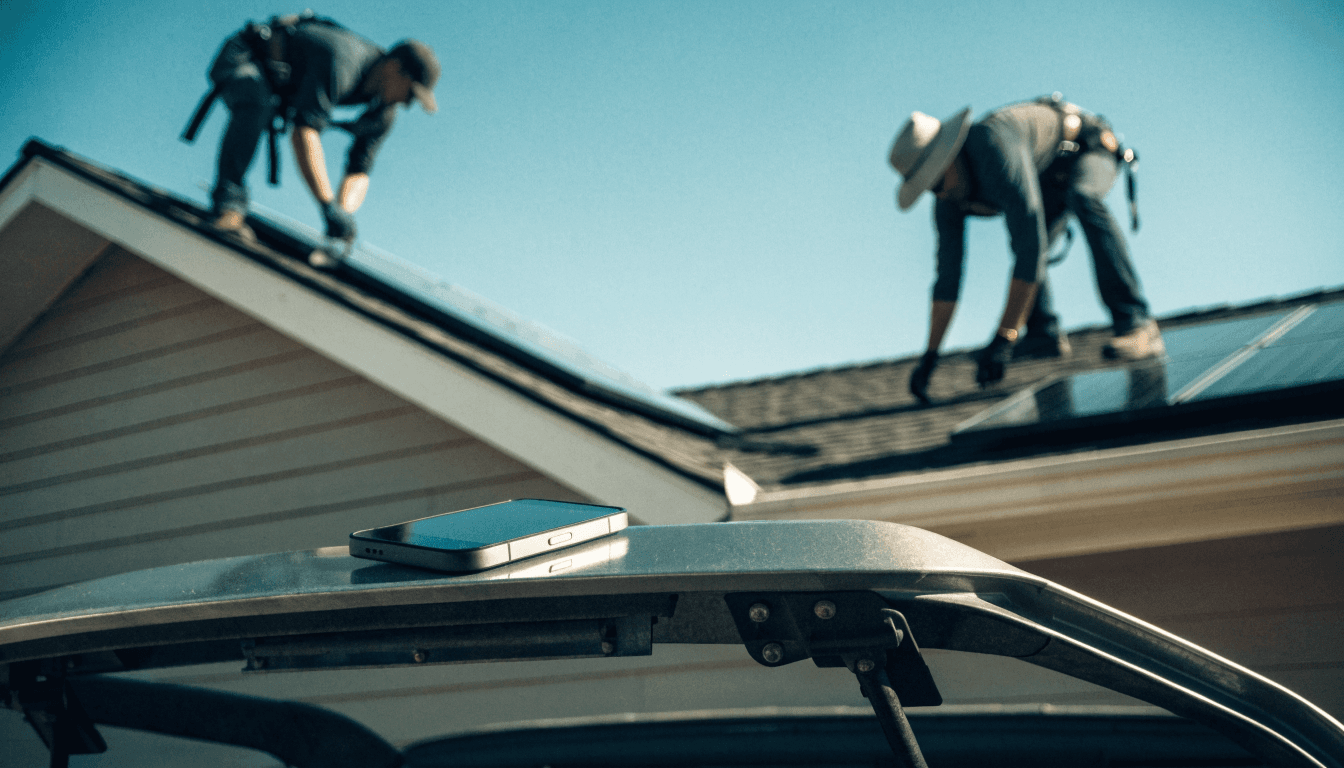
A solar company I looked at last quarter was paying around $80 a lead and answering maybe one call in three. Sit with that for a second. You pay premium money for the click, the form fill, the inbound call, and then a chunk of it rings out to voicemail while your crew is up on a roof. An AI receptionist for solar installers is built to close that exact gap, and most owners still file it under nice-to-have.
Quick version: an AI receptionist for solar installers is a voice agent that picks up every inbound call on the first ring, qualifies the homeowner, checks the basics like roof and utility bill, and books the site assessment straight into your calendar. It runs around the clock, including the after-hours and midday calls your team can't physically catch.
Solar is the worst industry to miss a call in
Speed decides solar deals more than price does. The company that responds first to an inquiry wins the sale roughly 78% of the time, according to speed-to-lead data compiled by AgentZap. That same research puts the average solar company's response time at about 47 hours. Forty-seven. The homeowner has taken three other quotes and half-signed with one of them by the time most installers call back.
It gets worse the longer you wait. A lead's value can drop by as much as 80% if you don't make contact inside the first five minutes. Reaching out in five minutes instead of thirty can lift your contact rate five to ten times over. None of that is reachable if a human has to be free, awake, and standing near a phone for it to happen.
Run the math on your own front desk
Here's the part that stings. Across studies of inbound business calls, companies answer under 38% of them. Of the callers who land in voicemail, 80 to 85% hang up without leaving anything. And 62% of unanswered callers just dial the next number on the search page. That number is your competitor.
Now put solar economics on top. If your blended cost per lead sits between $60 and $90 and you're quietly dropping a third of them, you aren't saving money by skipping a receptionist. You're setting fire to your ad budget one missed ring at a time.
What most people get wrong about fixing it
The reflex is to hire a receptionist or sign up a call center. Both miss how solar calls actually arrive. They don't trickle in evenly. They spike. The evening after your ad goes live. The Saturday afternoon following a canvassing push. The hour after a storm knocks a neighbor's system offline. One human holds maybe one conversation at a time, so when six calls hit at once, five go to voicemail, and you already know what happens after that.
Call centers scale bodies but not context. The agent has never seen a net-metering form and can't tell a homeowner from a renter, so they take a message and hand you a lukewarm lead. An AI receptionist handles all six calls at the same time and asks the same qualifying questions on every one, at 2pm or 2am, without a bad Monday.
What a solar-ready AI receptionist should actually do
Answering is the floor, not the product. For solar specifically, the agent should qualify on the things that decide whether an appointment is worth your installer's drive time:
- Confirm the caller owns the home. Renters are a fast, polite dead end.
- Ask roof type and rough age, and flag heavy shading or a recent re-roof.
- Capture the average monthly electric bill, so you know rough system size before anyone drives out.
- Get the timeline, and whether they've already collected other quotes.
- Book the site assessment into your calendar and fire off a text confirmation while intent is still hot.
It should also respect the rules. Solar sits under real TCPA scrutiny, so the agent needs to log consent and stay inside legal calling windows instead of blasting callbacks at random hours. Anyone selling you a receptionist that ignores that is handing you a liability, not an asset. Our AI receptionist that qualifies inbound logs consent on every call.
What we see on live calls
When we set one of these up, the first week is almost always a gut-check for the owner. They finally see how many calls were leaking. One install client had assumed their voicemail was catching the overflow. Of the calls the agent handled in the first fortnight, more than half came in outside business hours or while another call was already live. Every one of those used to die on hold. Instead they showed up as booked assessments.
That's the whole pitch. Not fewer humans. More of the calls you already paid for turning into someone standing on a roof with a clipboard.
Want to see it answer your call flow before you commit? Book a demo and we'll build it around how your leads actually come in, then give you a 15-day trial to run it live. Curious how the cost works first? Our pricing page lays it out plainly.
FAQ
How much does an AI receptionist for solar installers cost?
Most AI receptionist platforms charge a monthly base fee for a set call volume, with higher tiers for more concurrent calls and integrations. Set against a $60 to $90 cost per lead, a single saved install usually covers the year.
Can an AI receptionist qualify solar leads, not just answer them?
Yes. A solar-ready agent checks homeownership, roof type, average bill, and timeline, then books the assessment. That's the line between an answering service and a booking machine.
Will homeowners know they're talking to AI?
Some will. Most won't clock it in a 60-second qualifying call. What they do notice is that someone picked up on the first ring at 8pm, which beats the voicemail your competitor left them at.
Does it work with my calendar and CRM?
A decent one books straight into your calendar and pushes the lead into your CRM with the answers attached, so your closer walks in already knowing the bill size and timeline.
What about TCPA and consent?
This one matters in solar. The agent should log consent and respect calling windows. Ask any vendor exactly how they handle it before you sign. Vague answers are a red flag.
Can it handle a rush of calls after an ad or door-knock push?
That's the main reason to run one. It takes every simultaneous call at once, so a spike after your campaign goes live doesn't turn into a voicemail pile.
How fast can I get it live?
If your call flow is straightforward, days rather than months. Most of the setup goes into mapping your qualifying questions and calendar, not building anything from scratch.
Related: Best AI Receptionist Platforms in 2026: An Honest Comparison and Why Your Leads Go Cold (and How AI Follow-Up Fixes It).
Sources: solar speed-to-lead and response-time benchmarks from AgentZap; inbound call answer rates and voicemail behavior from AMBS Call Center and Zadarma.