AI Receptionist for Veterinary Clinics: The Calls Your Front Desk Never Hears
Your front desk answers maybe three calls in four on a busy day, and the ones it misses rarely call back. An AI receptionist for veterinary clinics covers the lunch rush, the after-hours emergencies, and the new clients quietly booking down the road.
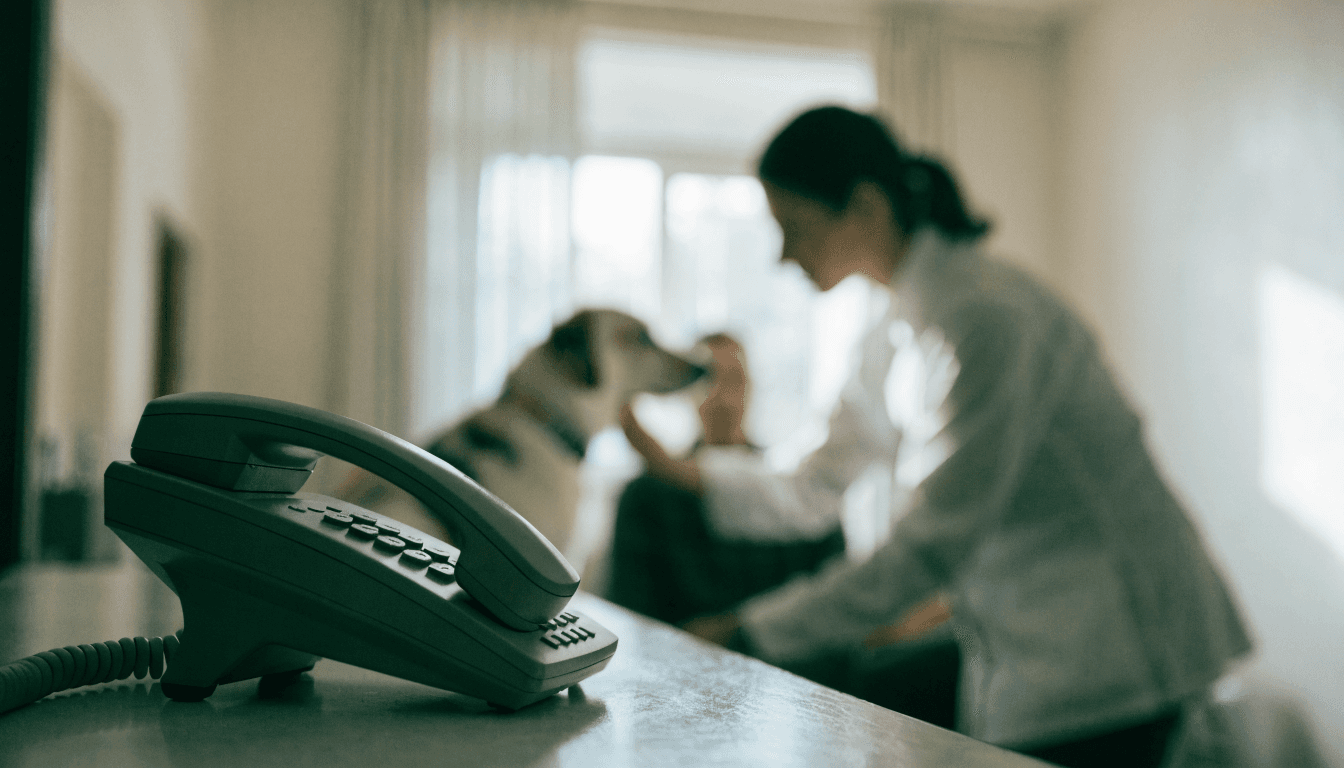
A practice manager in Austin sent me her call report from one week in July. 312 calls came in. 84 of them rang out unanswered, most between noon and two, when the lobby is full and both techs are pinning a nervous German Shepherd for a nail trim. She'd added one line to the email: I always assumed we caught most of them.
Almost nobody does.
That gap is where an AI receptionist for veterinary clinics earns its keep. The typical clinic answers three calls in four on a normal day, and fewer once you count lunch and after close. Industry call-tracking data puts it in the same range: roughly a quarter of calls to the average vet clinic go unanswered (Peerlogic). And most of those callers don't leave a message and try again later. They dial the next clinic on the map.
An AI receptionist for veterinary clinics is a voice agent that answers every inbound call the instant it rings, books and reschedules appointments straight into your practice management software, triages the difference between a routine vaccine query and a dog that ate chocolate, and takes the overflow your front desk physically can't reach. It works through the lunch rush, after hours, and on Saturday morning.
Why the vet phone leaks more than most
A vet front desk is one of the hardest phone jobs in small business. The person answering is also checking in a patient, calming an owner whose cat is yowling in a carrier, and reading back lab results the vet just handed them. The phone is the fourth thing competing for a pair of hands built for two.
So calls don't get ignored. They get lost. Someone's on hold with a distributor, a walk-in needs a form, and the second line rings four times and rolls to voicemail. Nobody decided to skip that call. The room just ran out of people.
The cost adds up quietly because it never shows on a report. There's no line item called lost appointments. But trade estimates have pegged a clinic with a leaky phone workflow at six figures of missed revenue a year (Today's Veterinary Business), and given the average vet visit and the lifetime value of a new pet, that isn't hard to believe.
Here's what most clinics get wrong
The reflex answer to a ringing phone is hire another CSR. Sometimes that's right. Often it isn't, and here's the part people miss: your call volume isn't flat. It spikes at open, at lunch, and in the hour after every clinic in town closes. A full-time hire smooths your average but does nothing for the peaks, because one human still answers one call at a time.
You end up paying for a seat that's idle at 3pm and still overwhelmed at 8:45am. The missed-call problem is a concurrency problem, not a headcount problem. That's the thing a voice agent actually solves. It answers the fortieth simultaneous call the same way it answers the first.
What it actually does on a vet call
Stripped of the demo gloss, a good setup handles four things:
- Books into your calendar. Not a promise to book. A real slot written into your PMS, so the appointment exists without anyone re-keying it later.
- Triages urgency. A vaccine reminder and a suspected bloat are not the same call. The agent asks the right screening questions and routes a genuine emergency to your on-call line or the nearest ER, instead of booking it for Tuesday.
- Answers the repeat questions. Hours, whether you're taking new clients, do you see exotics, what a spay runs, where to park. The stuff that eats your front desk's day and never needed a human.
- Captures the overflow. When every line is busy or the clinic's closed, it takes the call instead of voicemail, and you get a booked appointment or a clean callback note the next morning.
The triage piece is where vet clinics differ from a plumber or a dentist, and it's the piece worth pressure-testing before you sign anything. An agent that books a poisoning as a routine wellness check is worse than voicemail.
The math, roughly
Skip the vendor slides and run your own number. Say you miss 15 bookable calls a week. Most of those people won't call back, so treat them as gone. If even a third would have booked, that's 5 appointments a week walking out the door, or around 20 a month.
Put your average new-visit value on those 20 and compare it to what a voice agent costs for the month. For most clinics the recovered bookings clear the subscription in the first week, and everything after is margin. If you want to work it through properly, our pricing page lays out the plans, and the full ROI breakdown walks the formula step by step.
One caution: don't count every missed call as a lost sale. Plenty are existing clients who'll try again, wrong numbers, or reps. The honest figure is bookable calls from people ready to make an appointment. That's a smaller number, and it's still bigger than most owners expect.
What it won't do, and shouldn't
It won't replace your front desk. It shouldn't. The person at the counter reading an anxious owner in the room is doing something no voice agent should try to fake. What it replaces is the missed call, the voicemail nobody returns, the 9pm ring that becomes the emergency clinic's booking by 9:15.
Think of it as covering the calls your team was never going to reach anyway, not swapping out the humans your clients already trust.
How to try one without betting the practice
Start it on overflow and after-hours only. Leave your team on the main line during business hours and let the agent catch what rolls past them. You keep the human touch where it counts and stop the leak at the edges. Once you trust the bookings and the triage, widen its hours. Our setup walkthrough covers the order of operations, including the calendar and triage steps people wire up last and regret.
Before you commit, make three test calls yourself. Book a routine appointment. Ask an off-script question. Then describe a real emergency and see where it routes you. If it handles all three cleanly, you've found the one. If it fumbles the emergency, keep looking.
Frequently asked questions
How much does an AI receptionist for a veterinary clinic cost?
Most sit in the low hundreds a month, far below a part-time CSR. For a clinic recovering even a handful of missed bookings a week, it usually pays for itself inside the first few days. See current plans on the pricing page.
Can it book straight into our practice management software?
That's the whole point of a good one. The agent writes the appointment into your calendar or PMS in real time, so nobody re-enters it by hand. If a tool can't do that and only takes a message, it's an answering service wearing an AI badge. Test it before you pay.
Will it know the difference between routine and an emergency?
A well-configured agent screens for urgency and routes true emergencies to your on-call line or a referral ER instead of booking them days out. This is the single most important thing to test for a vet clinic, so make a mock emergency call before you decide.
Does it sound like a robot?
The current generation of voice agents is close enough that most callers don't clock it, especially on a short booking call. It interrupts, pauses, and handles a change of mind mid-sentence. Call one yourself and judge with your own ears rather than a highlight reel.
Will it replace my receptionist?
No, and you shouldn't want it to. It covers overflow and after-hours, the calls your front desk was never going to reach. Your team keeps the in-room and business-hours work where a human matters most.
How long does setup take?
A basic overflow-and-after-hours setup can be live in a day or two. The calendar integration and triage rules take the most care, which is why starting on overflow first lets you validate everything before it touches your main line.
Next step: pull your own call log for one week and count how many bookable calls rang out. If it's more than a handful, put an AI receptionist on overflow and see what it recovers. AI Placers runs a 15-day free trial, so you can point it at your after-hours line and watch the bookings land before you pay anything. Start a free trial or book a demo.