Boost Customer Care with a 2026 AI Voice Agent: What to Know
Explore the future of customer care with 2026 AI voice agents. This guide details their advanced capabilities, from real-time sentiment analysis to seamless CRM integration, explaining why they are essential for modern businesses. Understand the benefits, implementation strategies, and compliance needs to leverage AI for superior customer service and operational efficiency.
Boost Customer Care with a 2026 AI Voice Agent: What to Know
Discover what a 2026 AI voice agent is and why it's revolutionizing customer care. This article provides a concise explanation of how these advanced AI virtual receptionists operate, offering 24/7 availability, instant call handling, and sophisticated sentiment analysis. It highlights why integrating an AI phone receptionist matters now, with projections of significant cost reductions and improved customer satisfaction. Learn how this guide helps businesses navigate the benefits, implementation strategies, and compliance considerations for leveraging cutting-edge AI to solve customer service challenges and gain a competitive edge by 2026.
What Defines a 2026 AI Voice Agent and Its Transformative Capabilities?

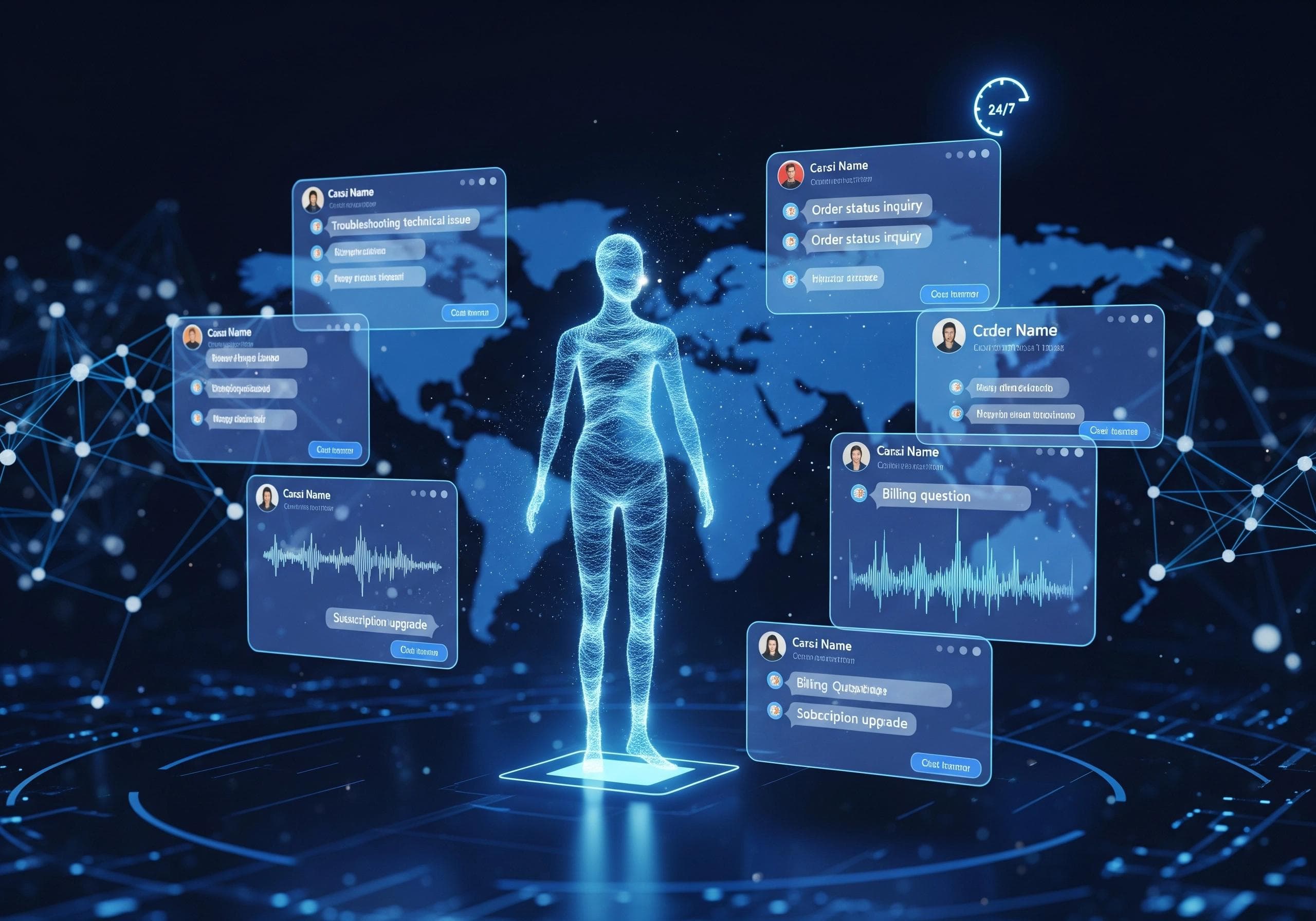
The landscape of customer interaction is undergoing a profound transformation, moving far beyond the rigid, menu-driven systems of traditional Interactive Voice Response (IVR). A 2026 AI voice agent is not merely a bot; it's a sophisticated, intelligent entity designed to engage customers with human-like precision and efficiency. We at AI Placers have seen firsthand how this evolution reshapes how businesses communicate.
Unlike their predecessors, these advanced agents leverage cutting-edge natural language processing (NLP) and Large Speech Models (LSMs) to understand context, intent, and even caller sentiment in real-time. This allows for fluid, organic conversations that feel remarkably natural, making them vastly superior to the frustrating, pre-scripted exchanges of the past. Gartner predicts that by 2026, 10 percent of customer service agent interactions will be fully automated, a significant leap from less than 2 percent in 2022, underscoring this shift.
Modern AI voice agents detect emotion and adapt their tone, creating a truly empathetic interaction.
What truly defines a 2026 AI virtual receptionist are its transformative capabilities. These include:
- Dynamic, Contextual Conversations: Moving beyond keywords to grasp the nuances of human speech, making every interaction relevant and personalized. Latency in 2026-ready models has dropped below 500 milliseconds, ensuring conversations flow almost instantaneously.
- Seamless CRM Integration: Native sync capabilities with platforms like Salesforce, HubSpot, and Zendesk allow agents to access customer history instantly, offering highly personalized service. This means a more informed and efficient interaction, every time.
- Intelligent Handoffs: When a complex issue requires human intervention, the AI agent provides a complete summary and transcript to the live agent, ensuring a smooth transition without repeating information. This capability is crucial for maintaining customer satisfaction.
- 24/7 Availability and Lead Capture: These agents never sleep, providing round-the-clock support, eliminating wait times, and ensuring no lead is ever lost, regardless of business hours. Businesses can significantly boost customer service with an AI phone receptionist that's always on duty.
These capabilities translate into tangible business benefits, such as reducing cost-per-interaction by up to 80 percent compared to human-led call centers. An AI voice agent can handle 70 to 80 percent of routine inquiries, from appointment scheduling to order status checks, without requiring human intervention. This significant efficiency gain allows human teams to focus on more complex, high-value tasks. For businesses looking to optimize their operations, implementing an AI virtual receptionist is a strategic move to enhance customer experience and operational efficiency.
Why is an AI Phone Receptionist Becoming Indispensable for Modern Businesses?
The modern business landscape demands constant availability and impeccable service. This makes the AI phone receptionist indispensable for companies aiming to thrive in 2026 and beyond, fundamentally redefining customer interaction from simple routing to intelligent engagement.
Elevating Customer Experience and Operational Efficiency
Today's customers expect immediate, consistent support, a need perfectly addressed by advanced AI phone receptionists. These intelligent systems offer genuine 24/7 availability, ensuring calls are answered promptly, preventing lost leads and improving first impressions. AI receptionists proficiently handle 70 to 80 percent of routine inquiries, freeing human teams for complex tasks.
Modern AI goes beyond basic answering. Sophisticated Large Speech Models (LSMs) detect caller sentiment and adjust tone in real-time, delivering personalized customer care automation. Seamless CRM integration with platforms like Salesforce provides context-aware support, as detailed in our guide to AI calling agents.
Driving Significant Cost Reduction
Beyond enhancing service, the financial implications of adopting an AI phone receptionist are compelling. AI voice agents can reduce the cost-per-interaction by up to 80 percent compared to human-led call centers. This substantial cost reduction is achieved by automating repetitive tasks, minimizing the need for extensive human resources in initial customer contact.
The shift to AI-driven receptionists translates directly into tangible savings and increased profitability.
This efficiency allows businesses to reallocate human talent to strategic roles, fostering innovation and deeper customer relationships. For more on transforming operations, explore our insights on AI virtual receptionists.
AI Placers provides human-sounding AI voice agents, with no-code setup and multilingual support, designed to seamlessly integrate and drastically improve customer experience while reducing operational costs. Embracing the efficiency and enhanced service of an AI phone receptionist is now a strategic imperative.
How Do AI Voice Agents Outperform Traditional Virtual Receptionists?

The landscape of customer interaction has fundamentally shifted, moving beyond the limitations of traditional virtual receptionists towards the dynamic capabilities of AI voice agents. While both aim to streamline communications, the distinction lies in their core operational intelligence and adaptability. Traditional virtual receptionists, often human agents working remotely, offer a valuable service but are bound by human constraints,availability, training, and the inherent variability in service quality.
Elevating Business Knowledge and Context
Unlike their human counterparts, modern AI voice agents are not simply following scripts; they are powered by deep learning models that integrate directly with a business's entire knowledge base. This means an AI receptionist vs virtual receptionist comparison immediately reveals AI's superior access to real-time data. They leverage CRM systems, product databases, and FAQs to provide precise, context-aware answers.
AI voice agents access and process information at speeds no human can match, ensuring every interaction is informed.
This robust business knowledge AI capability allows for nuanced responses to complex queries, providing personalized service based on a customer's history or specific needs. It's a significant leap from the limited information a human virtual receptionist can typically recall or quickly access during a call.
Unwavering Consistency and Availability
One of the most compelling advantages of AI voice agents is their capacity for consistent service 24/7, 365 days a year. A traditional virtual receptionist operates within set hours and can be subject to human factors like fatigue, mood, or differing interpretations of policy. AI, however, delivers the same high-quality, brand-aligned interaction every single time.
This reliability is crucial for customer satisfaction and brand perception. With AI, businesses eliminate wait times and ensure no lead is lost after hours, capturing every opportunity. Gartner predicts that by 2026, 10 percent of customer service agent interactions will be fully automated, a testament to this consistent performance.
Advanced Appointment Booking AI
When it comes to scheduling, appointment booking AI far surpasses manual methods. AI voice agents can instantly check real-time availability, integrate with multiple calendar systems, and confirm appointments without human intervention. This capability extends beyond simple scheduling; AI can send reminders, reschedule appointments, and handle cancellations efficiently.
AI Placers' solutions, for instance, offer seamless integration and a no-code setup, enabling businesses to deploy sophisticated AI voice agents that sound human and manage call handling, including complex scheduling, with ease. This level of automation not only frees up staff but also reduces the potential for human error in booking processes, ensuring a smooth customer journey. You can explore how these advanced AI voice agents streamline operations and improve customer service automation on the AI Placers website.
When is the Optimal Time to Integrate an AI Calling Agent into Your Operations?
The evolving landscape of customer service demands strategic decisions regarding technological adoption. Many businesses grapple with the persistent challenge of scaling support without escalating costs, leading to a critical question: When does an AI calling agent implementation shift from a beneficial option to an operational imperative?
When Call Volumes Overwhelm Human Capacity
If your customer service lines are consistently swamped, leading to extended hold times and frustrated callers, it's a clear signal. Businesses facing high call volume solutions often find their human agents stretched thin, struggling to manage the influx of routine inquiries like appointment scheduling or order status checks. This inefficiency not only impacts service quality but also drains valuable employee time.
AI voice agents can handle 70 to 80 percent of routine inquiries, freeing your human team for complex tasks.
Integrating an AI calling agent in this scenario provides immediate relief. It ensures 24/7 availability, eliminating wait times and guaranteeing that no lead is lost after hours. This proactive approach to managing demand prevents customer churn and enhances overall operational flow.
When Customer Satisfaction Dips and Costs Soar
Another critical indicator for AI integration is a noticeable decline in customer satisfaction alongside escalating operational costs. Traditional call centers are expensive to staff and maintain, and even the most dedicated human agents can face burnout, leading to inconsistent service quality. This creates a friction point where customer experience suffers and your budget takes a hit.
Poor customer experience translates directly into lost business and damaged reputation.
This is where a sophisticated customer satisfaction AI truly shines. Modern AI voice agents, like those provided by AI Placers, can detect caller sentiment and adjust their tone in real-time, delivering a personalized and empathetic experience that traditional systems cannot match. They offer a budget-friendly AI solution, reducing cost-per-interaction by up to 80 percent compared to human-led centers, while simultaneously boosting satisfaction.
Key Indicators for Strategic AI Integration
Consider integrating an AI calling agent when your business exhibits one or more of these signs:
- Consistent High Call Volume: Overburdened staff and long customer wait times.
- Rising Operational Costs: Increasing expenses for staffing and infrastructure without proportional gains in efficiency.
- Declining Customer Satisfaction: Feedback indicating frustration with wait times, inconsistent service, or lack of 24/7 support.
- Need for 24/7 Availability: Customers expect constant access, and AI provides this without additional human shifts.
- Desire for Scalability: Rapid growth requires a flexible solution that can handle increasing demand effortlessly.
When these factors converge, the optimal time for AI calling agent implementation is now. Solutions like those found on the AI Placers platform offer seamless integration with existing CRMs, ensuring personalized service based on customer history, and providing a powerful tool to transform your customer interactions. Explore the various AI Placers use cases to see how an AI calling agent can specifically benefit your sector.
What Critical Factors Should Businesses Consider Before Deploying an AI Voice Agent?

Deploying an AI voice agent isn't merely a technological upgrade; it's a strategic decision demanding careful consideration of several critical factors. Businesses must look beyond the immediate efficiency gains and evaluate the long-term implications for customer trust, legal standing, and ethical responsibilities.
Prioritizing Human Touchpoints
While AI voice agents excel at routine inquiries, appointment scheduling, and order status checks,handling 70 to 80 percent of such tasks without human intervention,they are not a universal solution. Complex problem-solving, emotionally charged interactions, or sensitive discussions often require the empathy and nuanced understanding only a human can provide.
Not every customer interaction is ripe for automation.
Identifying these specific scenarios where human preference remains paramount is crucial. AI Placers advocates for a balanced approach, using AI for efficiency while reserving human agents for high-value, high-emotion calls, ensuring a seamless handoff process when escalation is needed. This prevents common AI adoption challenges related to customer satisfaction.
Navigating the Legal and Ethical Landscape
The regulatory environment surrounding AI is rapidly evolving, making legal compliance a paramount concern. The Federal Communications Commission (FCC) recently ruled that AI-generated voices in robocalls are illegal under the Telephone Consumer Protection Act (TCPA) without prior express consent, highlighting the critical need for transparency and adherence to regulations. Businesses must ensure their AI deployments are fully compliant to avoid legal repercussions.
Beyond robocalls, data privacy AI is another non-negotiable aspect. With the rise of sovereign AI, companies are increasingly hosting their own voice models to meet stringent regulations like GDPR and CCPA. Protecting customer data is not just a legal requirement but a fundamental trust-builder. Platforms that offer robust GDPR compliance and secure data handling are essential for responsible AI use.
Consider solutions like AI Placers which are built with these compliance standards in mind, providing the necessary infrastructure for secure and ethical operation. Furthermore, businesses must proactively address ethical considerations like algorithmic bias and fairness to ensure their AI serves all customers equitably. For insights into how AI Placers addresses these needs, explore our dedicated voice AI platform features at AI Placers.
Ultimately, successful AI voice agent deployment hinges on a comprehensive understanding of both its capabilities and its limitations, coupled with an unwavering commitment to legal compliance and ethical standards. This strategic foresight ensures that AI enhances, rather than detracts from, the overall customer experience. We are committed to helping businesses navigate these complexities successfully. ."}
```json
{
How Can AI Voice Agents Elevate Specific Industry Customer Service Standards?
AI voice agents are no longer a generic, one-size-fits-all solution; their true power lies in their ability to adapt and specialize for distinct industries, fundamentally transforming customer service standards. We've moved past simple IVR systems to intelligent conversational models that understand and respond to sector-specific nuances.
Elevating Healthcare Customer Engagement
In healthcare, the stakes are incredibly high, and efficiency is paramount. An AI for healthcare voice agent can revolutionize patient interactions by handling routine inquiries, freeing up human staff for more critical tasks. Think about the convenience of a system that can accurately schedule appointments, process prescription refill requests, or provide directions to a clinic, all while adhering to strict privacy regulations like HIPAA.
For instance, an AI voice agent can confirm upcoming appointments, proactively remind patients about necessary preparations, or answer common questions about insurance and billing after hours. This ensures patients receive timely information, reducing administrative burden and enhancing overall patient satisfaction. AI Placers offers specialized solutions for healthcare AI solutions that integrate seamlessly into existing workflows, providing reliable 24/7 support for clinics and hospitals.
Streamlining Home Services Operations
The home services sector, from plumbing to HVAC, often grapples with unpredictable call volumes and dispatch challenges. This is where AI for home services truly shines. An AI voice agent can manage appointment bookings, provide real-time updates on technician arrival times, and answer common service questions, ensuring smooth operations and happier customers.
Imagine a customer calling about a burst pipe late at night; an AI can not only log the emergency but also guide them through immediate steps or connect them to an on-call technician, significantly improving response times. AI customer engagement in this sector means proactive communication and efficient problem resolution, even during peak hours.
Enhancing Salon and Personal Service Bookings
For salons, spas, and other personal service businesses, maintaining a personal touch while managing a busy schedule is key. Industry-specific AI voice agents can handle the constant influx of calls for bookings, rescheduling, and service inquiries, allowing staff to focus entirely on clients in-person. These agents provide consistent, accurate information and can even promote special offers or new services.
AI Placers' AI voice agents offer a no-code setup, enabling businesses in diverse sectors to quickly deploy tailored solutions that improve customer service automation. By understanding the unique demands of each industry, AI voice agents deliver focused value, driving both operational efficiency and superior customer experiences across the board. The flexibility of these systems ensures that whether you're in healthcare, home services, or salons, your specific needs are met with precision. You can explore more about how AI Placers helps various industries by visiting their website: https://aiplacers.com.
What's Next for AI Voice Agents: Preparing for the Future of Customer Care?

The landscape of customer care is on the cusp of a profound transformation, driven by the relentless evolution of AI voice agents. We're moving beyond simple automation to an era where AI doesn't just respond, but anticipates and empathizes, fundamentally reshaping how businesses connect with their customers.
The Next Wave of AI Capabilities
Looking ahead, the future of AI in customer service is defined by unparalleled growth and sophistication. The global conversational AI market is projected to soar to $29.8 billion by 2028, reflecting a widespread embrace of these intelligent systems. This isn't just about handling more calls; it’s about handling them smarter.
We anticipate a significant shift towards predictive service AI, where systems analyze historical data and real-time cues to foresee customer needs before they even articulate them. Imagine an AI voice agent proactively offering solutions or relevant information based on your past interactions, transforming reactive support into proactive engagement. This proactive approach will redefine customer experience.
Advanced models, like those showcased by OpenAI's GPT-4o, are already introducing high-fidelity, emotionally intelligent voices capable of natural interruptions and nuanced conversations. These breakthroughs ensure that AI interactions feel remarkably human-like, fostering greater trust and satisfaction. The days of robotic, frustrating IVRs are rapidly fading.
Operationalizing the Future of Customer Care
One critical area of ongoing development is mastering seamless handoffs between AI and human agents. As Gartner predicts that 10% of agent interactions will be fully automated by 2026, the remaining complex cases demand a smooth transition. AI will provide comprehensive summaries and transcripts, empowering human agents with full context for swift resolution.
Compliance and data privacy remain paramount as AI advances.
The regulatory environment is also evolving, with rulings like the FCC's stance on AI-generated voices in robocalls highlighting the need for ethical deployment. Businesses must prioritize solutions that ensure data privacy, especially with the rise of sovereign AI models catering to standards like GDPR and CCPA. Our commitment at AI Placers is to provide AI voice agents that are not only advanced but also compliant and secure.
Preparing for this future means adopting robust, adaptable AI solutions. AI Placers offers a voice AI platform designed for easy, no-code setup and seamless integration, enabling businesses to leverage these cutting-edge capabilities today. Investing in these sophisticated AI agents is an investment in future-proofing your customer care, ensuring efficiency, compliance, and exceptional customer satisfaction.
Ready to elevate your customer service with cutting-edge AI? Discover how AI Placers can provide your business with human-like AI voice agents for seamless, efficient, and compliant customer interactions.
Frequently Asked Questions about AI Voice Agents
What makes an AI voice agent '2026-ready'?
A 2026-ready AI voice agent utilizes advanced Large Speech Models (LSMs) capable of dynamic conversations, real-time sentiment detection, and emotional tone adjustment. These agents also feature low latency, near-instantaneous responses, and sophisticated integration with business systems like CRMs.
How can an AI phone receptionist improve customer satisfaction?
AI phone receptionists provide 24/7 availability, eliminating wait times and ensuring no customer inquiry goes unanswered. Their ability to handle routine tasks efficiently and offer personalized interactions based on customer history, coupled with sentiment analysis, leads to a more positive and consistent customer experience.
Are AI voice agents compliant with regulations like TCPA and GDPR?
Compliance is crucial. Legitimate AI voice agents ensure transparency and obtain necessary consent, especially following FCC rulings on AI-generated voices in robocalls. For data privacy, solutions like those from AI Placers prioritize GDPR and CCPA compliance, with options for sovereign AI hosting to maintain strict data control.
Can AI calling agents handle complex customer service issues?
While AI calling agents excel at handling a high percentage of routine inquiries like appointment scheduling and order status, they are designed for seamless handoffs to human agents for complex or sensitive issues. The AI provides a full summary and transcript to the human agent, ensuring continuity of care.
What are the cost benefits of using an AI receptionist?
AI receptionists can significantly reduce operational costs, with potential savings of up to 80 percent per interaction compared to traditional call centers. They automate routine tasks, freeing up human agents for higher-value interactions and reducing the need for extensive staffing, especially for after-hours support.
How does AI voice agent integration work with existing business systems?
Modern AI voice agents offer native integration capabilities with popular CRMs like Salesforce, HubSpot, and Zendesk. This allows them to access customer history for personalized interactions and log call details, ensuring a unified view of the customer and streamlining workflows.