AI Calling Rules for UK Home Services: Ofcom, ICO, and What Actually Applies
UK AI calling rules split across two regulators doing different jobs. Here is what PECR and Ofcom actually require of a home services business, where inbound AI receptionists sit, and what the September 2025 avatar fines really punished.
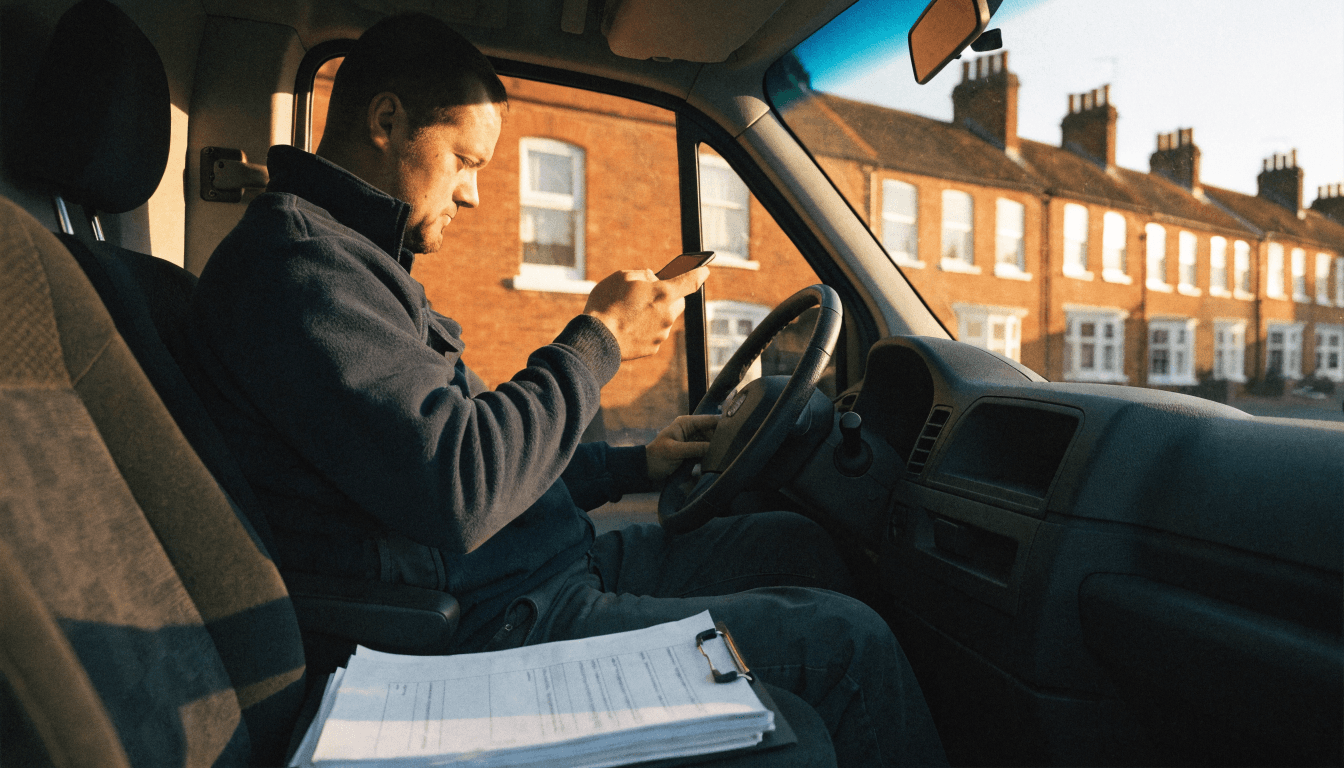
In September 2025 the ICO fined two firms in the energy and home improvement trade a combined £550,000 for automated marketing calls. Green Spark Energy took £250,000 for 9.5 million calls. Home Improvement Marketing took £300,000 for 2.4 million. Both used avatar software: agents overseas triggering scripted lines recorded by voice actors, so the homeowner believed they were talking to Jo or Helen or Ian somewhere in Britain.
Every UK home services owner I speak to about AI calling asks the same thing, in the same worried voice. Is this legal?
The question is too broad, because two regulators are involved and they police different things.
The short version
UK AI calling rules split across two bodies. The ICO enforces PECR, which decides whether you are allowed to ring a number for marketing at all, and it treats automated calls far more strictly than live ones. Ofcom polices how your dialler behaves on the line. Inbound AI receptionists sit almost entirely outside both.
Two regulators, two different jobs
Think of it as permission versus conduct.
The ICO owns permission. Under the Privacy and Electronic Communications Regulations, regulation 21 covers live marketing calls: you can ring a number that is not registered with the TPS or CTPS, as long as the person has not already told you to stop. Regulation 19 covers automated calls, and the bar jumps. You need consent that specifically covers automated marketing calls from your business. General consent to marketing does not count, and neither does consent to live calls. You also stop bothering with TPS screening, because without that specific consent you cannot ring anyone.
Ofcom owns conduct. It enforces persistent misuse powers under the Communications Act 2003, and it does not care whether your call had consent. It cares whether you dropped the call and whether you showed a number the homeowner can ring back.
You can be clean with one regulator and in breach of the other. Most people who get caught only ever read about whichever one fined somebody recently.
Here is what most people get wrong
Two mistakes, and the second costs real money.
The first is reading those avatar fines as "the ICO has banned AI calls." It has not. The director told the ICO that due diligence was not done on the data providers and, in his own words, no consent was obtained. That is the breach. The tech mattered because it made the calls harder for the public to spot and report, which is why the ICO published tips on recognising them. You could have run those same 9.5 million calls with humans in a room in Durham and still been fined.
The second is applying outbound rules to inbound calls. If a homeowner rings you at ten past nine because their boiler has failed, regulation 19 has nothing to say about it. Regulations 19 and 21 govern unsolicited marketing you push outwards. Answering your own phone is not marketing. I have watched plumbing firms sit on an AI receptionist for months, convinced they needed consent to pick up a call the customer made, while a competitor two postcodes over booked the job.
Where the line sits for an AI voice agent
The part that is actually uncertain comes next.
Regulation 19(4) defines an automated calling system as one capable of automatically initiating a sequence of calls and transmitting sounds which are not live speech. A model generating speech in real time is doing something a recorded clip does not. It is also not a human talking.
My advice to every client is to treat an AI agent making outbound marketing calls as automated, and to stop hunting for a way around it. No UK court has tested whether a conversational model counts as live speech, and the Data (Use and Access) Act 2025 took the PECR ceiling from £500,000 to £17.5 million or four percent of global turnover, effective February this year. Do not put that number behind a clever reading of a 2003 statutory instrument.
When we ran outbound for an HVAC client last year we got a six percent reply rate, and every number on that list came with a record of where it came from. Smaller list. The one you can actually dial.
The Ofcom half almost nobody reads
Ofcom's revised persistent misuse statement, published in December 2016 and in force since 1 March 2017, contains no abandoned call rate threshold at all.
The three percent figure still quoted in half the dialler blogs online was never a permission slip. Ofcom said so directly: it was a criterion for prioritising cases, not a safe harbour. Every abandoned call is non-compliant.
For any outbound system that means:
- Present a valid caller line identity the homeowner can ring back
- If a call does get abandoned, play a short message within two seconds of pickup naming your company and giving contact details
- Let unanswered calls ring for at least fifteen seconds
- Do not redial the same number within 72 hours unless a live agent is guaranteed at your end
An AI agent answering inbound removes the abandoned call problem entirely, because there is no queue and nothing to drop. Nobody selling voice AI bothers to make that part of the case.
Recording calls is a separate question
Recordings fall under UK GDPR, not PECR, in either direction. Tell the caller you are recording, say why, set a retention period you can defend, and be able to produce the file if someone makes a subject access request. "For training purposes" is thin cover when the real reason is quality scoring. Say what you mean.
The checklist I would run before switching anything on
- Split inbound from outbound on paper. Most home services firms find the commercial value sits heavily on the inbound side.
- For outbound, prove where every number came from and what the person agreed to. If you cannot evidence it, do not dial it.
- Screen live call lists against TPS and CTPS. Registration takes up to 28 days to go live, so a list screened last month is not screened.
- Check your CLI presents a working number.
- Write the recording notice and pick a retention period.
- Keep the logs. Every ICO notice in this sector turns on what the firm could evidence, not what it believed.
FAQ
Are AI phone calls legal in the UK?
Yes. Inbound AI answering is lawful. Outbound AI marketing calls are lawful where you hold specific consent for automated calls and your dialling meets Ofcom's rules.
Do I need consent for an AI receptionist that answers my phone?
No. PECR governs unsolicited outbound marketing. Answering a call the customer made is not marketing. You still need a recording notice under UK GDPR.
Is an AI voice agent an automated calling system under PECR?
The regulation refers to transmitting sounds which are not live speech, so the safe reading is yes. No UK court has tested it. Treat it as automated and get specific consent.
What did the ICO actually fine those energy firms for?
Making automated marketing calls without consent. The avatar software made them harder to spot, but the breach was the missing consent.
Does the TPS apply to automated calls?
You do not need to screen, because you cannot lawfully make one without specific consent whether or not the number is registered.
What is the maximum PECR fine now?
The Data (Use and Access) Act 2025 raised it from £500,000 to £17.5 million or four percent of global annual turnover, effective February 2026.
Can I call my existing customers with an AI agent?
Only if they gave consent covering automated calls from you. The customer relationship does not create that consent on its own.
Who handles complaints about silent calls?
Ofcom takes silent and abandoned calls. The ICO takes consent and marketing.
What to do next
If your AI calling is inbound, PECR is not your problem and your homework is the recording notice. Go and get the phone answered.
If you are planning outbound, your constraint is the list, not the technology. Audit where those numbers came from before you spend a penny on a dialler.
We run inbound AI receptionists for UK home services firms on a 15 day free trial, no card needed, so you can find out what your missed calls were worth. To see it against your own call flow first, book a demo.
Related reading: AI Receptionist for HVAC and AI Receptionist ROI.
Sources: ICO news release, 25 September 2025; ICO guidance on electronic and telephone marketing; Ofcom statement of policy on persistent misuse; Clifford Chance on the Data (Use and Access) Act 2025.
General information on how the rules work, not legal advice. Check your position with a solicitor before starting an outbound campaign.