AI Receptionist for Med Spas: The Consult Call Nobody Trained Anyone to Sell
Most med spas buy an AI receptionist to stop missing after hours calls. That is the smaller leak. The bigger one is the answered call that gets handled like order taking while the caller is already dialling the clinic down the road.
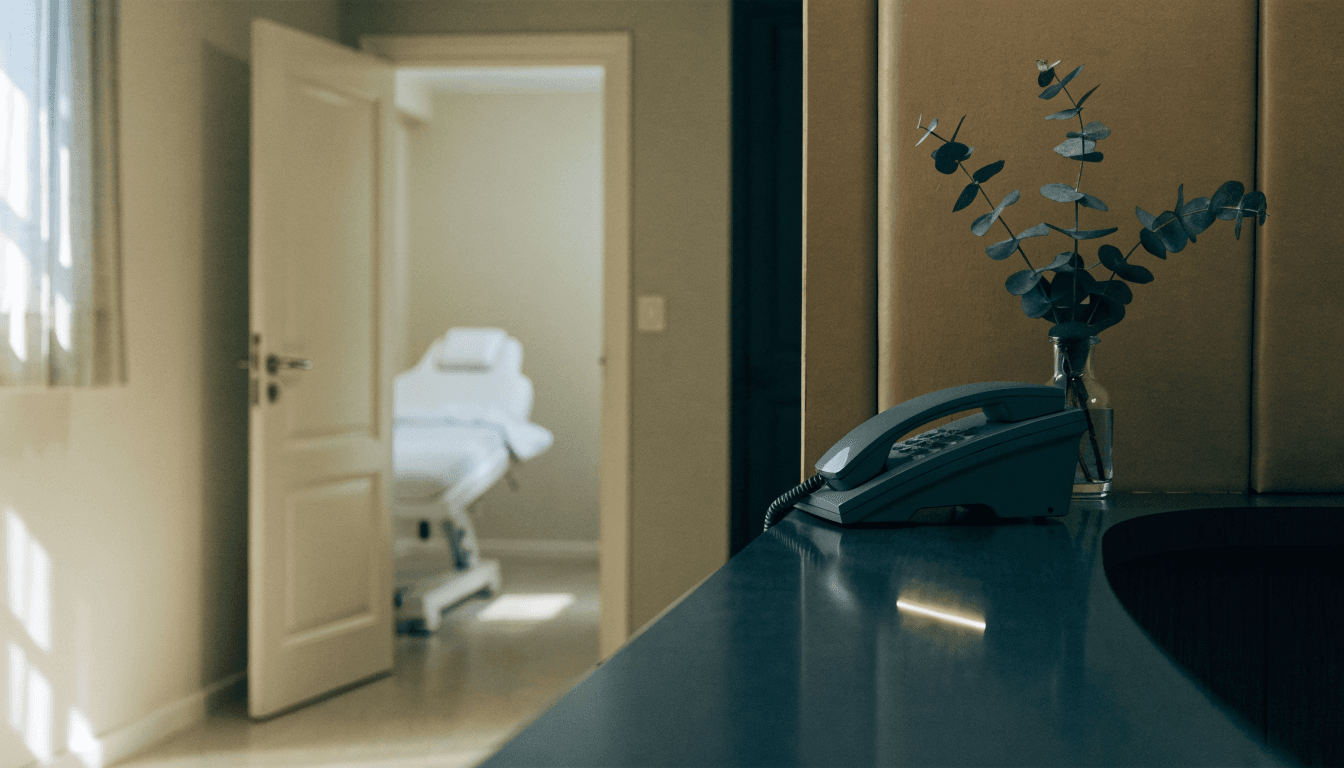
AI receptionist for med spas: the consult call nobody trained anyone to sell
A med spa owner in Manchester told me her front desk answers about seven in ten calls. She was proud of that number. Then I asked what happens to the seven that get answered.
Her answer: "We take a name and book them in."
That is the problem, and it has nothing to do with the three calls she missed.
An AI receptionist for med spas is usually sold as coverage. Stop missing calls at 7pm, stop missing calls when both injectors are in rooms. Fine. But coverage fixes the smaller leak. The expensive one is the call you did answer, handled by someone standing between two treatment rooms with a client waiting, who takes a name and a number and lets the caller go.
The short version
A med spa caller is comparison shopping a discretionary purchase, not reporting an emergency. They will ring two or three clinics in one sitting and book with whoever answers the pricing question and puts a consult in the diary before the call ends. Coverage gets you into the running. Handling the call properly is what wins it.
Why the plumber playbook does not transfer
Most AI receptionist advice is written for emergency trades. I have written a fair amount of it myself. When a boiler fails in February, the caller is in pain, the job is not optional, and speed is almost the entire game. Answer first, win the job. Our HVAC and plumbing posts lean hard on exactly that.
Aesthetics does not work like that.
Nobody's face is leaking. A tox appointment is something the caller has been thinking about for six weeks and could keep thinking about for another six. There is no deadline forcing a decision, which means the call has to create one.
Here is what most people get wrong. They assume that because speed to lead wins in home services, speed is the whole answer in aesthetics too. It is not. Speed only buys you the chance to have the conversation. If the conversation is "can I take your number and get someone to call you back," you have spent your speed advantage on nothing. The caller hangs up and opens the next tab.
The American Society of Plastic Surgeons counted more than 28.5 million minimally invasive procedures in 2024, with neuromodulator injections alone at 9,883,711 and hyaluronic acid fillers at 5,331,426 (ASPS 2024 statistics). The American Med Spa Association puts the sector past 17 billion dollars in annual revenue (AmSpa). Those callers are ringing someone. The question is whether the someone is you.
The four things an aesthetic call has to do
Answering is step zero. After that the call has a job, and it is a sales job.
First, it answers the price question without flinching. Med spa callers open with "how much is Botox." Front desks are often told to deflect that into a consult booking, which reads as evasive and sends the caller straight to the clinic whose website listed a number. Give a real range, then explain what moves it.
Then it qualifies, without interrogating. Area of concern, whether they have had treatment before, rough timeline. Three or four questions will do it. The medical history belongs in the room, with a clinician.
It has to book while the caller is still on the phone. Not "someone will call you back." An actual slot on an actual date, confirmed before the call ends. Every handoff you add is somewhere the booking can die.
The last one is about what it refuses to do. Anything clinical, it hands over. This is where med spas get themselves into trouble, and it is a separate conversation from the sales one. If you are handing patient calls to a vendor, the paperwork matters more than the demo did. I wrote up what to verify on HIPAA before the first patient call because almost every vendor in this space says "HIPAA compliant" without signing a thing.
Where the bookings actually leak
Three places, in my experience, and only one of them is after hours.
The first is the simultaneous call. Two people ring at 2pm. One gets through, one gets voicemail, and the one who got voicemail does not leave a message because they were never that committed. Human receptionists cannot be in two conversations at once, which is the whole argument in our concurrency post.
The second is the consult that gets booked and then evaporates. Aesthetic no shows are worse than general practice no shows because the appointment is optional and unpaid. A reminder text is not a recovery system. Calling the patient back within ten minutes of the miss and refilling the slot the same day is, which is the argument in the no show recovery post.
The third is the one nobody measures: the answered call that got order taken. There is no log entry for it. Your booking software shows a call that did not convert, and everyone assumes the caller was a tyre kicker. Sometimes they were. Often they were ready and nobody asked for the booking.
What I would check before buying anything
Pull your last hundred inbound calls. Not the missed ones. The answered ones.
Count how many ended with a confirmed appointment in the diary. If that number is under half, your problem is not coverage and a voice agent bolted onto the same script will not fix it. Fix the script first, then automate it.
Then count how many of the missed calls came in during opening hours. If a meaningful share did, you have a concurrency problem rather than an after hours problem, and those are solved differently.
I run this audit the same way I run outbound diagnostics. On a cold campaign for an HVAC client we hit a 6 percent reply rate across 30 warmed inboxes, and that number only meant anything because we had counted the baseline first. Phone handling deserves the same treatment.
Honest limitations
A voice agent will not talk a nervous first timer through her worry about looking frozen, or read the pause before she asks whether anyone will be able to tell. Those calls exist, and they are often the highest value ones.
What it does well is the repeatable eighty percent: pricing ranges, availability, rebooking, the 9pm enquiry, the second caller at 2pm. Route the rest to a human and stop pretending the tool is more than it is. I said most of this already in what AI receptionists still get wrong, and none of it has changed.
FAQ
How much does an AI receptionist for a med spa cost?
Pricing depends on call volume and how many concurrent lines you need. Current plans are on the pricing page. The number that matters more is cost per booked consult, which you cannot work out until you know your answered to booked rate.
Can an AI receptionist quote Botox prices over the phone?
Yes, and it should. Give it your real price ranges and the factors that move them. A quoted range with a reason behind it converts better than a deflection into a consult booking.
Will patients know they are talking to an AI?
Some will. Disclose it anyway. In aesthetics trust is the product, and a caller who works it out later feels tricked. The clinics that handle this well say it plainly in the first few seconds.
Is an AI receptionist HIPAA compliant for a med spa?
Only if the vendor signs a business associate agreement and can tell you where recordings and transcripts live. Most will not unless asked. Read the HIPAA checklist before you sign anything.
Can it reduce med spa no shows?
It can run the recovery calls, which is the part most clinics skip. Reminders alone have hit their ceiling. Calling back fast after a miss and refilling the slot the same day is what moves the number.
What happens when a caller asks a clinical question?
It should decline and route to a clinician. Any vendor whose agent answers a treatment suitability question on the phone is a liability, not a feature.
Does it work for a single location clinic?
Yes. Single room clinics often see the sharpest difference, because nobody is at the desk while the practitioner is treating.
How long before I can tell if it is working?
Two weeks of real call volume is enough to see the answered to booked rate move. That is why the trial runs 15 days.
Next step
Pull your last hundred answered calls and count the confirmed bookings. If it is under half, you have a handling problem worth fixing before you buy anything.
If you want to test the coverage side at the same time, start a 15 day free trial and point your after hours and overflow calls at it for two weeks, or book a demo and bring your call log.