Automate Your Office: A 2026 Guide to AI Virtual Receptionists
This guide explores the transformative power of AI virtual receptionists for office automation in 2026. Discover their capabilities, the benefits of adopting them, and a step-by-step implementation process. Learn how to choose the right AI voice agent to enhance customer service and streamline operations.
Automate Your Office: A 2026 Guide to AI Virtual Receptionists
Discover how AI virtual receptionists are transforming office automation in 2026. This comprehensive guide explains what these advanced AI phone receptionists are, why they are essential for enhancing customer service and reducing operational costs, and how to successfully implement an AI calling agent into your business workflow. Learn step-by-step how to select, configure, and optimize an AI voice agent to achieve 24/7 availability and streamline your operations, leveraging the latest advancements in conversational AI.
What is an AI Virtual Receptionist and Why Does Your Office Need One in 2026?

The modern office landscape is rapidly transforming, moving beyond traditional human-centric operations to embrace intelligent automation. By 2026, the concept of a receptionist has evolved dramatically from a human behind a desk or a simple chatbot to a sophisticated AI virtual receptionist. These aren't just automated answering machines; they are advanced AI voice agents capable of understanding context, handling complex conversations, and integrating seamlessly into your existing tech stack.
Evolving from Basic Bots to Advanced Agents
Historically, automated customer service often meant frustrating, rigid voice menus. Today's AI virtual receptionists, however, leverage advanced Large Language Models (LLMs) and hyper-realistic voice synthesis to deliver near-instant, natural conversations. They act as a cornerstone for modern office automation, offering capabilities that were once exclusive to science fiction.
Modern AI virtual receptionists provide a seamless, human-like interaction experience.
Why does your office need one by 2026? The numbers speak for themselves. The global conversational AI market is projected to reach approximately $30 billion by 2028, underscoring a significant surge in adoption expected well before then. Businesses are realizing substantial cost savings, often 70% to 90% compared to hiring full-time staff, while simultaneously eliminating wait times and providing 24/7 availability. This means your office can handle thousands of concurrent calls, a feat impossible for even the largest human teams. For a deeper dive into this shift, consider exploring how businesses are adopting these agents in our Beyond Human Touch: Why Businesses Are Adopting AI Calling Agents in 2026 guide.
At AI Placers, we empower businesses to easily deploy these sophisticated AI voice agents with no-code setups and multilingual support, ensuring every interaction is efficient and human-like. This comprehensive 2026 guide will walk you through everything you need to know, from understanding their core capabilities to implementing them for maximum impact, ultimately transforming your front office operations. To learn more about seamless integration, read our article on Streamline Your Front Office: Integrating an an AI Virtual Receptionist for 2026.
Why is 2026 the Right Time to Embrace AI for Your Front Desk?
The year 2026 marks a pivotal moment for businesses considering the integration of an AI virtual receptionist. We've seen the technology mature rapidly, moving from rudimentary chatbots to sophisticated AI voice agents that can genuinely transform front desk operations. This isn't just about adopting new tech; it's about seizing a strategic advantage in customer service and operational efficiency.
One of the most compelling reasons to embrace an AI receptionist now is the promise of 24/7 availability and the complete elimination of wait times. Unlike human teams, an AI agent can handle an unlimited number of concurrent calls, ensuring every customer receives an immediate, consistent response regardless of the hour or day. This seamless accessibility significantly boosts customer satisfaction and operational fluidity.
Unlocking Significant Cost Savings
Beyond availability, the financial benefits are undeniable. Traditional human receptionists in the U.S. typically command an annual salary ranging from $35,000 to $45,000. In stark contrast, a high-tier AI voice agent from a provider like AI Placers often costs between $500 and $2,000 per year, depending on call volume. This represents a staggering cost savings of 70% to 90%, freeing up significant capital that can be reinvested into core business growth. The global conversational AI market's projected surge to $30 billion by 2028 further underscores this value proposition, highlighting a clear trend towards AI-driven solutions for managing customer interactions and reducing operational overhead.
Investing in an AI voice agent is a strategic financial decision that delivers immediate returns.
Advanced Capabilities of 2026-Era AI
What truly sets 2026 apart is the sheer sophistication of modern AI phone receptionists. These aren't simple voice bots; they are powered by advanced Large Language Models (LLMs) like GPT-4o or Claude 3.5, enabling nuanced reasoning and context-aware conversations. Hyper-realistic voice synthesis from technologies like ElevenLabs ensures interactions are virtually indistinguishable from human speech, fostering a natural and engaging customer service experience. Furthermore, these agents boast sub-500ms latency, making conversations feel near-instant.
Crucially, today's AI agents offer seamless integrations with your existing tech stack, including CRMs like Salesforce and HubSpot, and scheduling tools like Calendly. This means they can log data, book appointments, process payments via Stripe, and even troubleshoot issues by accessing live databases, all in real-time. This level of 'Agentic AI' moves beyond basic answering to performing complex, value-adding tasks that enhance every call. To understand how these advanced AI phone receptionists elevate interactions, explore how they can Boost Customer Service: How AI Phone Receptionists Enhance Every Call in 2026.
By embracing AI voice agents now, businesses are not just adopting a tool; they are leveraging a comprehensive solution that ensures superior customer interactions, significant cost efficiencies, and round-the-clock operational excellence. This is the moment to transform your front desk with AI Placers' AI voice agents to ensure your business remains competitive and customer-centric. Discover more about our AI voice agents at AI Placers.
How Can You Successfully Implement an AI Virtual Receptionist, Step-by-Step?
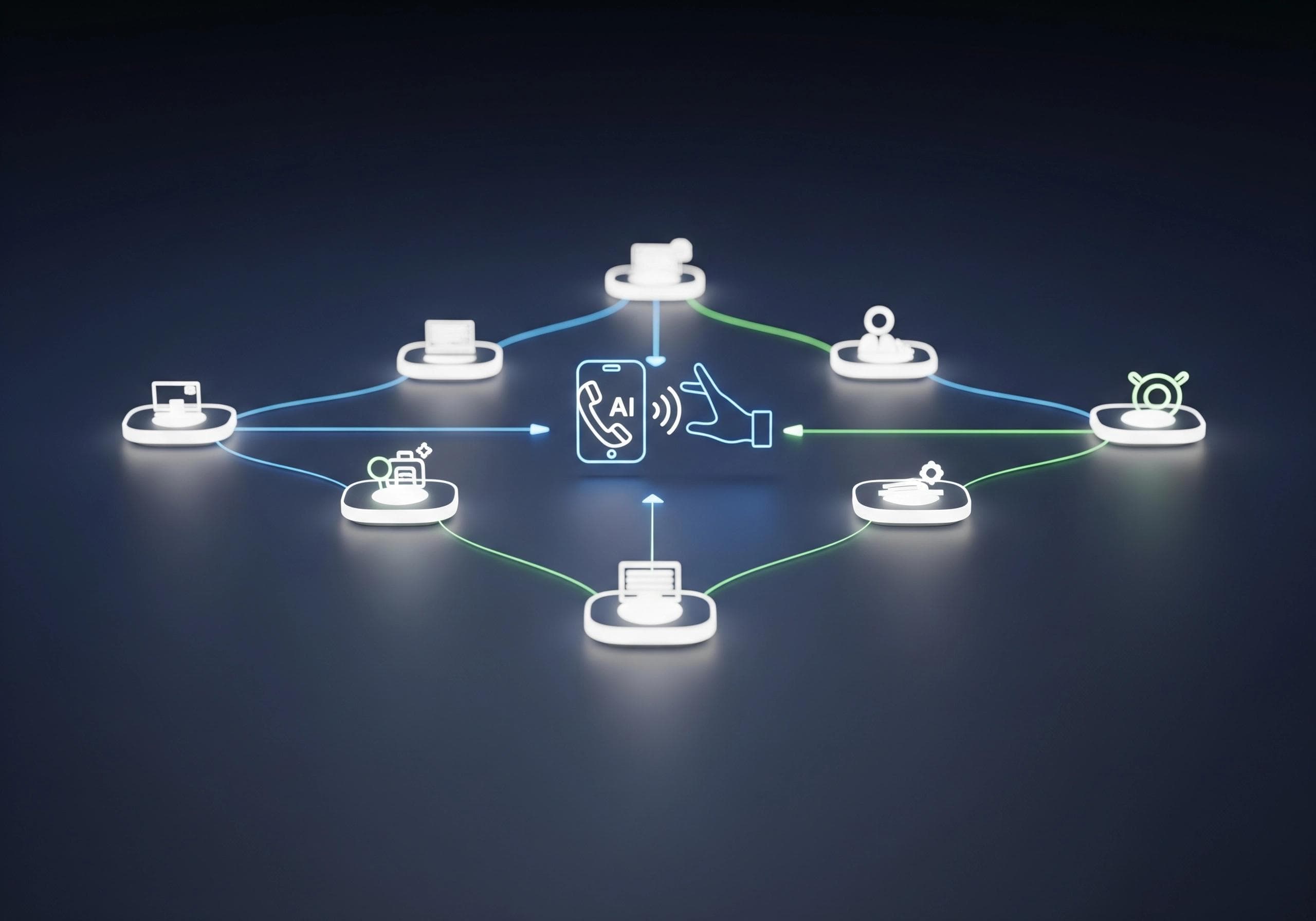
Successfully deploying an AI virtual receptionist transforms your customer service, but it requires a strategic, step-by-step approach. As AI Placers has observed, the key lies in meticulous planning and integration to ensure a seamless transition and maximum operational efficiency. This isn't just about plugging in new software; it's about optimizing your entire communication workflow.
1. Assess Organizational Readiness and Define Clear Goals
Before diving into technicalities, evaluate your current front-desk operations. Identify pain points,long wait times, repetitive inquiries, or missed calls,that an AI calling agent can address. Define specific, measurable goals, such as reducing call volume by 30% or achieving 24/7 availability. Understanding your baseline allows you to measure the AI's impact and solidify your implementation guide.
A clear vision for your AI's role is non-negotiable for success.
2. Map Customer Journeys and Interaction Points
Detail the typical paths callers take when interacting with your business. What questions do they ask? What information do they need? Where do they experience friction? Mapping these journeys helps you design an AI that can intelligently guide callers, resolve issues, or seamlessly transfer them to human agents when necessary. This step ensures the AI enhances, rather than disrupts, the customer experience.
3. Craft System Prompts and Upload Knowledge Bases
This is where your AI gains its personality and intelligence. "System Prompts" define the AI's persona, tone, and operational rules, ensuring it sounds human and aligns with your brand. Next, upload your existing FAQs, product information, and service details into its knowledge base. Modern AI agents, like those powered by advanced Large Language Models, learn from this data to provide accurate and contextually relevant responses, moving beyond simple scripts.
4. Configure Telephony and CRM Integrations
The practical operational setup involves configuring your phone systems. This typically means setting up VoIP forwarding or SIP trunking through providers like Twilio or RingCentral, directing incoming calls to your AI virtual receptionist. Simultaneously, integrate the AI with your Customer Relationship Management (CRM) systems (e.g., Salesforce, HubSpot). This allows the AI to log interactions, update customer profiles, and even book appointments or generate leads in real-time, providing a truly automated workflow. For more on optimizing these interactions, explore how an AI receptionist enhances service.
5. Thorough Testing and Iterative Refinement
Once configured, rigorous testing is paramount. Conduct internal dry runs with various scenarios, paying close attention to the AI's response accuracy, conversational flow, and ability to handle interruptions. Gather feedback and use it to refine prompts, update the knowledge base, and adjust settings. This iterative process ensures your AI virtual receptionist is polished and ready for live deployment. For a deeper dive into agent capabilities, read about boosting customer care with a 2026 AI voice agent.
Following these steps ensures your AI virtual receptionist deployment is smooth, effective, and delivers the significant cost savings and efficiency gains promised by this transformative technology.
Which AI Virtual Receptionist Solution is Right for Your Business?
Choosing the right AI phone receptionist solution can feel overwhelming with the array of options available in 2026. The key is to align technology with your specific operational demands, ensuring it enhances efficiency and customer experience without unnecessary complexity. It’s not just about automating calls; it’s about strategically deploying an AI voice agent that acts as a seamless extension of your business.
Matching Solutions to Your Business Needs
Your business size and unique requirements are paramount in selecting an appropriate platform. A small startup might prioritize cost-effectiveness and quick deployment, while a large enterprise will demand robust integrations and scalability. Consider these crucial factors:
- Business Size and Call Volume: Do you need to handle hundreds or thousands of calls concurrently? Modern AI agents, unlike human staff, can manage virtually unlimited simultaneous interactions, eliminating wait times and ensuring 24/7 availability.
- Specific Functional Requirements: Are you primarily looking for lead generation, appointment scheduling, efficient call handling, or advanced multilingual customer service automation? Some platforms excel in niche areas, while others offer comprehensive suites.
- Integration Ecosystem: How well does the AI solution integrate with your existing Customer Relationship Management (CRM) systems like Salesforce or HubSpot, or calendar tools like Calendly? Seamless data flow is critical for operational efficiency.
- Multilingual Support: In a globalized market, supporting multiple languages is a significant differentiator. Platforms offering robust multilingual support can expand your reach and improve accessibility.
Essential Virtual Receptionist Features to Prioritize
Beyond basic answering capabilities, 2026-era virtual receptionist features offer sophisticated functionalities that elevate customer interactions. Look for solutions that provide:
- Hyper-realistic Voice Synthesis: The AI should sound indistinguishable from a human, using advanced models like those from ElevenLabs or Play.ht, to build trust and improve the caller experience.
- Real-time Transcription and Analytics: The ability to transcribe conversations in real-time and analyze metrics like customer satisfaction (CSAT) scores offers invaluable insights for continuous improvement.
- Complex Task Execution: Can the AI process payments, troubleshoot issues, or access live databases? The rise of 'Agentic AI' means agents can now perform multi-step tasks, moving beyond simple information retrieval.
- No-Code Setup: Platforms like AI Placers emphasize no-code setup, making it easy for businesses to configure and deploy AI voice agents without requiring specialized technical expertise. This significantly reduces implementation time and costs.
Navigating Leading Providers in 2026
When evaluating leading providers, the landscape offers a spectrum of solutions, from highly customizable platforms requiring developer input to user-friendly, out-of-the-box services. The best choice hinges on your internal resources and desired level of control. Some providers focus on raw AI power, demanding extensive configuration, while others prioritize ease of use and rapid deployment.
For businesses seeking powerful, human-like AI voice agents with a straightforward implementation, platforms like AI Placers stand out. Our focus on no-code setup, advanced multilingual support, and seamless integrations allows you to quickly deploy AI receptionists that handle complex inquiries and improve overall customer satisfaction. This empowers your business to leverage cutting-edge conversational AI without the typical technical hurdles.
Ultimately, the ideal AI virtual receptionist solution is one that not only meets your current operational needs but also scales with your future growth, providing an exceptional experience for your callers while optimizing your resources.
What Are the Key Tips & Best Practices for Maximizing AI Receptionist Performance?
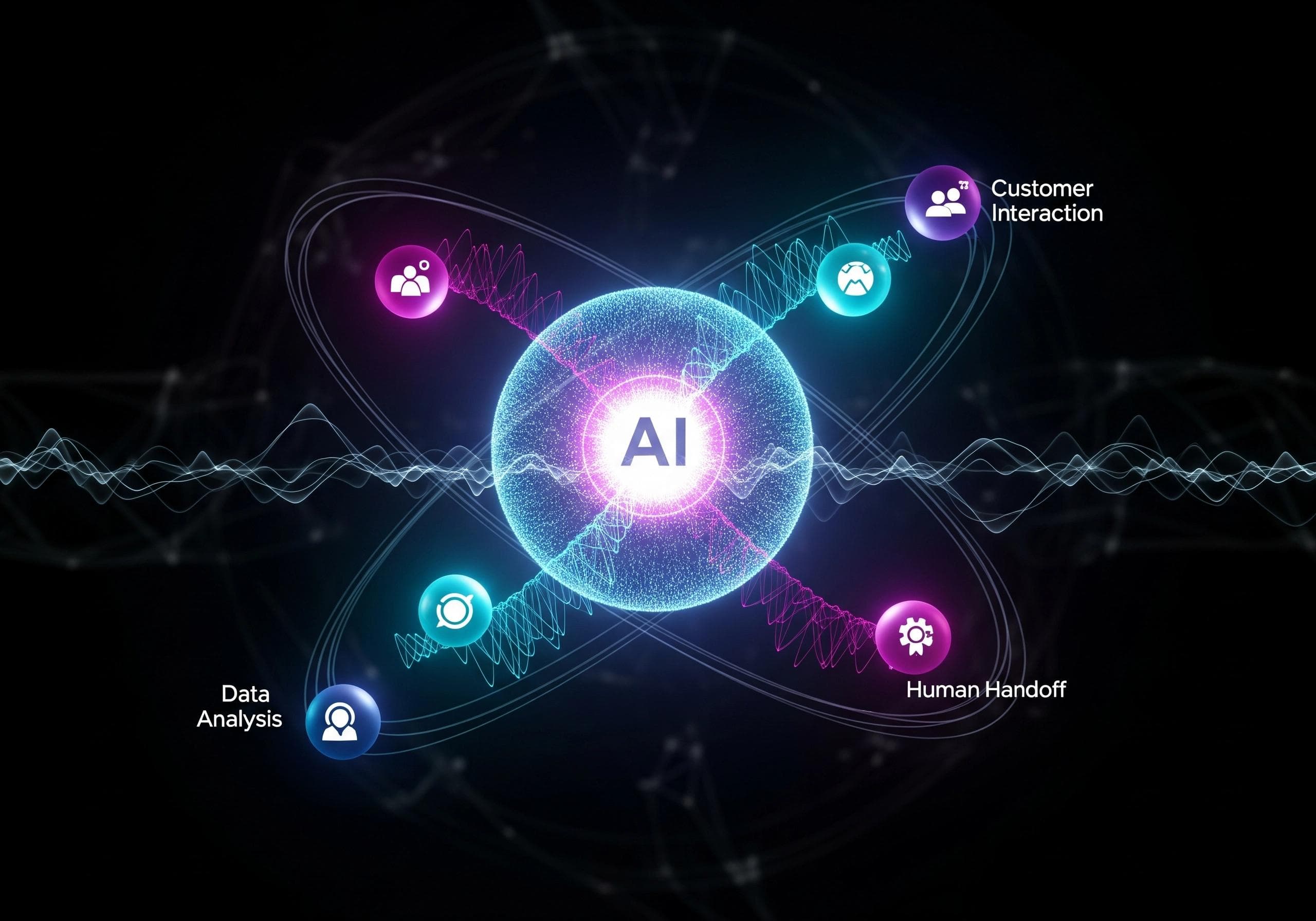
Deploying an AI virtual receptionist is a significant step, but maximizing its impact requires ongoing attention and adherence to key best practices. It's not a set-it-and-forget-it solution; rather, it's a dynamic tool that thrives on continuous refinement and strategic management.
Prioritizing Continuous Monitoring and Refinement
To truly unlock the potential of your AI voice agent, you must embrace a cycle of monitoring, analysis, and refinement. Regularly review call logs, interaction transcripts, and performance analytics. Look for patterns in common queries that lead to escalation or dropped calls, identifying areas where your AI receptionist tips can be enhanced.
Experiment with different system prompts or update your knowledge base to address new FAQs or evolving business needs. Platforms like AI Placers' no-code setup make this iterative process straightforward, allowing you to fine-tune your agent's responses without technical hurdles. Consistent vigilance ensures your AI voice agent evolves with your business needs. This proactive approach guarantees your AI assistant remains effective and responsive to customer demands.
Optimizing the Human-AI Handoff Experience
Even the most advanced AI will encounter scenarios requiring human intervention. The goal is not to eliminate human interaction entirely, but to ensure a seamless handoff experience when it's necessary. Define clear escalation triggers based on sentiment, complexity, or specific keywords. When a handoff occurs, the AI should provide the human agent with a complete transcript and relevant customer data, ensuring the customer doesn't have to repeat themselves.
Integrating your AI virtual receptionist with your existing CRM and helpdesk systems is crucial. This enables instant data transfer, empowering your human team to pick up the conversation exactly where the AI left off. This collaborative model boosts customer satisfaction and operational efficiency, leveraging the strengths of both AI and human intelligence, as highlighted in the seamless communication capabilities of modern AI voice agents.
Navigating Compliance Protocols
In the era of advanced AI, understanding and adhering to compliance protocols is non-negotiable. The FCC’s 2024 ruling on AI-generated voices under the Telephone Consumer Protection Act (TCPA) mandates that businesses obtain explicit consent and provide clear disclosures when using AI for outbound calls. This is a critical consideration for any business leveraging AI for proactive customer engagement.
For industries like healthcare, finance, or legal, adherence to specific regulations such as HIPAA or GDPR is paramount. Ensure your AI virtual receptionist solution is designed with these standards in mind, prioritizing data privacy and security. Adhering to legal standards protects your business and builds customer trust. A robust AI platform will offer features and configurations that help maintain compliance, safeguarding your operations while enhancing customer interactions.
How to Troubleshoot Common Issues with Your AI Voice Agent?
Even the most advanced AI solutions can encounter hiccups. When deploying an AI voice agent, you might face challenges ranging from speech recognition difficulties to rigid conversational flows. The key to successful adoption and sustained performance lies in proactive troubleshooting and a commitment to ongoing refinement.
Refining Speech Recognition and Accent Comprehension
One common issue businesses encounter is their AI agent struggling with diverse accents or rapid speech. While modern Large Language Models (LLMs) are highly capable, their performance can be enhanced. To improve comprehension, ensure your AI’s training data is as diverse as your customer base.
A well-trained AI voice agent can dramatically improve first-call resolution.
Platforms like AI Placers offer multilingual support and robust speech-to-text engines designed to process a wide range of vocal patterns. If specific accents remain a challenge, consider augmenting your knowledge base with common phrases or questions spoken in those accents to fine-tune the agent’s understanding.
Enhancing Conversational Fluidity and Flexibility
An AI that sounds human but acts like a robot can quickly lead to caller frustration. Rigid, script-bound interactions are a thing of the past. To avoid this, focus on refining your agent's system prompts to encourage natural language processing (NLP) and dynamic responses.
Continuously review call transcripts to identify patterns where the AI struggles to adapt or offers unhelpful responses. Iterative prompt engineering is crucial for AI optimization, allowing the agent to handle interruptions and emotional nuances more gracefully. This iterative process is vital for boosting caller satisfaction.
Streamlining System Integrations
An AI voice agent's true power comes from its ability to integrate seamlessly with your existing tech stack. Poor integration can lead to data silos and inefficient workflows. If your agent isn't logging calls to your CRM or scheduling appointments correctly, it's often an integration issue.
Verify that API keys are correctly configured and that data flows are mapped accurately between systems. Many businesses find immense value in solutions that offer a no-code setup for integrations, simplifying the process. For instance, AI Placers' use cases demonstrate how their AI voice agents integrate with various business tools, ensuring smooth operations and data synchronization.
Are You Ready to Transform Your Office with an AI Virtual Receptionist?

Having explored the transformative power of AI virtual receptionists, from their advanced technical capabilities in 2026 to the step-by-step implementation process and best practices, the question now becomes: are you truly ready to automate office operations and redefine your customer experience? We've seen how these intelligent agents, powered by sophisticated LLMs and hyper-realistic voice synthesis, offer unparalleled 24/7 availability and dramatically reduce operational costs, far surpassing the capabilities of traditional human-only teams. Indeed, businesses leveraging AI virtual receptionists can expect cost savings of 70% to 90% compared to full-time staff, a compelling argument for adopting this technology now.
The AI virtual receptionist benefits extend beyond mere cost reduction; they are about enhancing every customer interaction. Imagine eliminating wait times, providing instant support, and ensuring every caller receives consistent, expert-level service, regardless of the hour. This is the future of CX that is already here. The journey to integrate an AI voice agent into your workflow is more straightforward than you might think, often featuring a no-code setup for rapid deployment.
Taking the leap to automate office communications positions your business at the forefront of innovation. It's about empowering your team to focus on high-value tasks while AI handles the routine, yet critical, front-desk interactions. If you’re ready to see these advantages firsthand, I encourage you to explore the capabilities of AI Placers, a leader in AI voice agents. Learn how our solutions can seamlessly integrate with your existing systems and deliver superior customer service automation for your unique business needs.
Ready to revolutionize your office operations? Discover the power of AI voice agents with AI Placers and achieve unparalleled customer service automation.
People Also Ask
What is an AI virtual receptionist in 2026?
An AI virtual receptionist in 2026 is an advanced AI voice agent that handles incoming calls, manages appointments, and provides customer support, mimicking human interaction with high fidelity. These systems leverage sophisticated Large Language Models (LLMs) and realistic voice synthesis to offer a seamless and professional front-desk experience.
How much does an AI virtual receptionist cost compared to a human?
AI virtual receptionists offer significant cost savings, with annual costs typically ranging from $500 to $2,000, depending on call volume. This is considerably lower than the average annual salary of $35,000 to $45,000 for a human receptionist in the U.S., making them a highly cost-effective solution for businesses.
Can AI virtual receptionists handle complex customer inquiries?
Yes, modern AI virtual receptionists, powered by advanced LLMs, can handle complex inquiries, troubleshoot technical issues, and even process payments by integrating with various business systems. Their ability to access knowledge bases and databases in real-time allows them to provide detailed and accurate information.
What are the benefits of using an AI calling agent for customer service?
AI calling agents provide 24/7 availability, eliminate customer wait times, and can handle thousands of concurrent calls, significantly improving customer satisfaction. They also ensure consistent service quality and can be programmed with specific brand voices and protocols, enhancing the overall customer experience.
How do I set up an AI voice agent for my business?
Implementing an AI voice agent involves defining its personality and rules (system prompts), uploading your business's knowledge base (FAQs), and configuring telephony integration via SIP trunking or VoIP. Providers like AI Placers offer no-code solutions to simplify this setup process.
What are the latest developments in AI receptionists?
Recent developments include 'Agentic AI' capabilities for performing complex tasks, adherence to FCC's TCPA regulations for AI-generated voices, and the shift from basic voice bots to sophisticated 'voice agents' that handle emotional nuances and interruptions naturally. This evolution ensures more human-like and effective interactions.