Boosting Business Calls: How an AI Phone Receptionist Works for You in 2026
Explore the transformative power of AI phone receptionists in 2026. This guide details how these advanced systems handle business calls intelligently, significantly reduce operational costs, and free up human staff for high-value tasks. Learn about their advanced technology, business benefits, and implementation strategies to gain a competitive edge.
Boosting Business Calls: How an AI Phone Receptionist Works for You in 2026
Discover what an AI phone receptionist is, an advanced conversational AI system that intelligently handles business calls, understands intent, and executes tasks autonomously. Uncover why this technology matters now, as businesses globally lose billions to missed calls and rising operational costs, making traditional reception methods inefficient. Learn how this guide provides a step-by-step approach to understanding and implementing AI receptionists, enabling you to capture every call, reduce expenses by up to 95%, and free up human staff for high-value activities, ensuring your business thrives in 2026.
Why Are Businesses Turning to AI Phone Receptionists in 2026?

In 2026, businesses face an unprecedented challenge: managing a relentless influx of customer interactions while striving for efficiency and growth. The limitations and costs of traditional reception methods are proving increasingly inadequate, forcing a reevaluation of front-office operations.
The problem for many businesses is stark: small businesses, for instance, miss an average of 62 percent of incoming calls. This isn't just an inconvenience; it translates directly into significant missed calls revenue loss, estimated between $19,000 and $260,000 annually. Such figures highlight why the pressure to find a robust solution for managing critical business calls in 2026 is higher than ever.
This pervasive issue is driving a massive shift towards sophisticated AI phone receptionist technology. The global AI virtual receptionist market, already valued at approximately $4.64 billion in 2026, is projected to grow at a compound annual rate of 24.3 percent through 2030. This surge reflects a clear market signal: businesses are actively seeking intelligent automation to overcome traditional hurdles.
The rapid embrace of AI isn't just about 24/7 availability; it’s about dramatic operational cost reductions,by 80 to 95 percent. Consider the contrast: a human receptionist can cost $3,000 to $4,500 monthly, while an AI solution typically ranges from $50 to $300. This fiscal advantage is undeniable. In fact, U.S. small businesses saw adoption reach 55 percent in 2025, with 91 percent reporting revenue improvements.
Companies like AI Placers are at the forefront, providing AI voice agents that sound human and integrate seamlessly. These advanced systems are not mere answering machines; they are intelligent agents transforming how businesses engage with customers. To truly understand their full potential, explore what an AI receptionist can achieve beyond basic answering. This guide will empower you to leverage this powerful shift, ensuring your business gains a competitive edge and is ready for AI Receptionists in 2026.
What Exactly Are AI Phone Receptionists, and How Do They Operate?
In 2026, the concept of a phone receptionist has evolved dramatically, moving far beyond the frustrating, rigid confines of traditional Interactive Voice Response (IVR) systems. Today’s AI receptionist, often referred to as an AI voice agent, represents a paradigm shift in how businesses handle inbound calls, offering a level of sophistication and human-like interaction previously unimaginable.
Beyond Traditional IVR: The Conversational AI Revolution
Unlike legacy IVR systems that rely on rigid menus and keyword matching, modern AI phone receptionists are powered by advanced conversational AI. These systems utilize sophisticated agentic AI models, such as those leveraging end-to-end speech-to-speech architectures like OpenAI Realtime API and Google Gemini 2.0 Flash. This native audio processing capability allows the AI to understand not just words, but also tone, emotion, and intent, processing calls with remarkable sub-300ms latency,matching human reaction speeds.
Modern AI receptionists don't just follow scripts; they understand, adapt, and respond dynamically.
This crucial distinction means callers experience fluid, natural conversations, rather than being forced through a series of predefined prompts. This significantly enhances the customer experience, making every interaction feel personalized and efficient. To truly understand how these systems elevate customer interactions, consider exploring how an AI virtual receptionist system transforms service delivery.
How Advanced AI Voice Agents Operate
The operational backbone of these advanced AI voice agents is built on several key technological innovations:
- End-to-End Speech-to-Speech Processing: This architecture eliminates the lag of traditional speech-to-text-to-processing pipelines, allowing for real-time, fluid conversations. The AI processes audio directly, interpreting nuances in speech patterns.
- Emotional Intelligence (EQ) Layers: Sophisticated algorithms analyze a caller's prosody, detecting frustration or urgency. This enables the AI to adjust its response style, mirror a caller's demeanor, or even escalate the call to a human agent when emotional cues indicate a need for personal intervention.
- Retrieval-Augmented Generation (RAG): To ensure accuracy and prevent
How Can an AI Phone Receptionist Dramatically Boost Your Business ROI?

The transition to an AI phone receptionist isn't merely an upgrade; it’s a strategic investment that fundamentally reshapes a business's financial health and operational efficiency. We've seen firsthand how these advanced AI calling agent solutions deliver a tangible return on investment, far surpassing the capabilities of traditional setups.
Unlocking 24/7 Availability and Unlimited Concurrency
One of the most immediate and impactful benefits is the elimination of missed calls. Historically, businesses miss an average of 62 percent of incoming calls, leading to staggering annual revenue losses between $19,000 and $260,000. An AI phone receptionist offers true 24/7 availability, ensuring every caller receives immediate attention, regardless of time zones or office hours.
Beyond constant availability, modern AI agents provide unlimited concurrency. This means hundreds, even thousands, of calls can be handled simultaneously without a single caller waiting on hold. This capability is a game-changer for businesses experiencing peak call volumes or those looking to scale operations without commensurate staffing increases.
Dramatic Operational Costs Reduction
Perhaps the most compelling argument for AI adoption is the significant operational costs reduction. Compared to a full-time human employee costing $3,000 to $4,500 per month, an AI receptionist typically operates between $50 and $300 monthly. This translates to an 80 to 95 percent reduction in expenses for call handling.
Cutting costs without compromising service quality is the ultimate efficiency gain.
This substantial saving frees up valuable capital, allowing businesses to reallocate resources toward growth initiatives, product development, or core business functions rather than routine administrative tasks. Our AI voice agents at AI Placers are designed precisely with this cost-efficiency in mind, providing robust support at a fraction of the traditional cost.
Boosting Lead Conversion and Revenue Improvements
Beyond cost savings, AI phone receptionists are powerful engines for revenue improvements. By ensuring every call is answered promptly and professionally, they significantly improve lead capture rates. When callers get an instant, helpful response, their engagement increases, moving them further down the sales funnel.
Studies show that 91 percent of U.S. small businesses adopting AI receptionists reported direct revenue improvements. This isn't just about answering calls; it's about qualifying leads, automating appointment scheduling, and executing warm hand-offs to human staff with full call transcripts and sentiment analysis. This seamless transition ensures human agents engage with pre-qualified, informed prospects, optimizing their time and increasing conversion rates. To truly boost productivity, consider how an AI virtual receptionist can transform your office operations.
How Can You Implement an AI Receptionist for Your Business?
Deploying an AI virtual receptionist might sound complex. However, with today's advanced platforms, the path from concept to a fully operational automated reception system is remarkably straightforward. It's not about overhauling your entire workflow, but intelligently enhancing it to boost efficiency.
Mapping Your Current Call Processes
Before integrating an AI phone receptionist, a critical first step is to thoroughly understand your existing call processes. Document common inquiries, key decision points, and the typical caller journeys. This initial audit is invaluable; it precisely illuminates where an AI can deliver the most significant impact, pinpointing areas of inefficiency or high call volume.
Expert Insight: A clear understanding of your current processes forms the bedrock for truly effective AI automation.
This detailed mapping helps you identify repetitive tasks that are prime candidates for automation. It ensures a seamless transition, proactively preventing any disruption to your critical business operations. Ultimately, this foundational work sets the stage for a smooth AI virtual receptionist setup.
Preparing Your Business Knowledge Base
Modern AI receptionists leverage Retrieval-Augmented Generation (RAG) technology to access specific business information in real-time. To empower your AI, you must compile a comprehensive knowledge base. This includes your frequently asked questions (FAQs), detailed product information, service specifics, and all relevant policy guidelines.
Such a robust knowledge base is crucial. It ensures your AI voice agent can consistently provide accurate, contextually relevant answers to callers without hallucinating or requiring constant human intervention. This preparation is key to the AI's success.
What Are the Key Strategies for Maximizing Your AI Receptionist's Performance?
Implementing an AI phone receptionist is a powerful upgrade for your business, but its true potential is unlocked through continuous optimization. Think of it less as a set-it-and-forget-it tool and more as a dynamic team member that requires ongoing refinement to deliver maximum impact. Our focus at BG AIPlacers is always on ensuring these AI voice agents perform at their peak, transforming how businesses handle calls.
Continuously Update Your Knowledge Base
The foundation of any high-performing AI receptionist is its knowledge base. This repository of information , from product specifications to service FAQs and company policies , must be current and comprehensive. Outdated information leads to inaccurate responses, which can frustrate callers and undermine the AI's effectiveness.
An outdated knowledge base can quickly turn an asset into a liability. Regularly review and update this data to reflect any changes in your business operations, offerings, or customer inquiries, ensuring your AI can always provide precise and helpful information.
Monitor and Analyze Call Recordings
One of the most valuable resources for optimizing AI performance lies in its call recordings. Listen to these interactions not just to catch errors, but to understand caller sentiment, identify common pain points, and discover recurring questions the AI might not yet be perfectly equipped to answer. This direct feedback loop is crucial for pinpointing areas where the AI's scripts or decision trees need adjustment.
Refine AI Behaviors Based on Performance Metrics
Beyond individual call reviews, leverage the analytics provided by your AI platform. Metrics such as call resolution rates, transfer rates, and average handling time offer quantitative insights into your AI receptionist's efficiency. Use this data to fine-tune the AI's conversational flow, improve its understanding of complex queries, and enhance its ability to guide callers effectively. This iterative process is central to applying AI receptionist best practices.
Leverage Advanced Features for Enhanced Performance
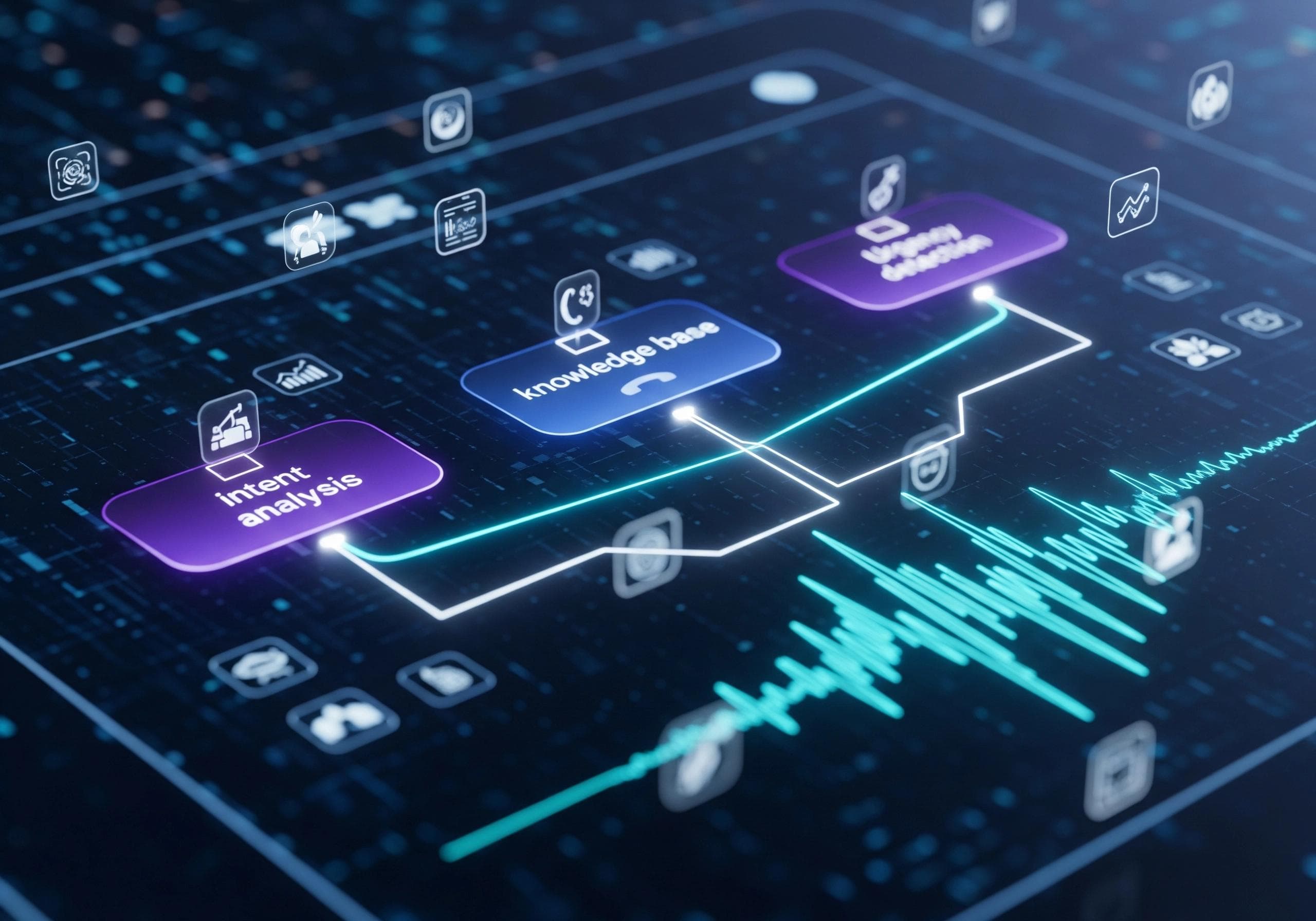
Modern AI voice agents come equipped with sophisticated features designed to boost their effectiveness. Features like urgency detection allow the AI to identify critical calls based on keywords or tone, ensuring high-priority issues are escalated appropriately and promptly. Exploring multi-channel support, integrating your AI across various communication platforms, can also create a more cohesive and efficient customer experience. Platforms like those offered by AI Placers provide a range of advanced features that enable businesses to truly master their AI phone receptionist's capabilities.
By taking a proactive approach to managing and evolving your AI receptionist, you ensure it consistently delivers exceptional service, reduces operational costs, and contributes significantly to your business's success. This continuous improvement mindset is key to unlocking the full potential of your investment.
Can You Avoid Common Pitfalls and Troubleshoot AI Receptionist Issues?
Even with the advanced capabilities of 2026 AI voice agents, anticipating and addressing potential challenges remains crucial for seamless operation. While agentic AI models excel at understanding intent and context, an AI receptionist troubleshooting strategy ensures you can navigate any unexpected interactions.
Identifying and Addressing Common AI Issues
One of the primary concerns for businesses integrating an AI phone receptionist is how it handles queries outside its programmed knowledge base or situations with high ambiguity. Modern AI, powered by Retrieval-Augmented Generation (RAG), minimizes “hallucinations” by grounding answers in your specific data. However, an AI caller might still present a complex or unusual request.
A well-defined knowledge base is your first line of defense against AI confusion.
When the AI cannot confidently answer a question, the system should be designed to recognize its limitations. This is where robust fallback protocols become indispensable. Instead of leaving the caller in limbo, the AI should gracefully pivot.
Implementing Effective Fallback Protocols
Effective fallback protocols ensure a smooth transition when the AI reaches its limits. This often involves a warm hand-off to a human agent, complete with a full transcript of the conversation and sentiment analysis. Platforms like AI Placers are designed with these intelligent hand-off capabilities, ensuring no detail is lost and the human agent is immediately up-to-speed. This maintains a high level of customer satisfaction, even during complex interactions.
Maintaining Conversational Flow and Clarity
Maintaining conversational flow is paramount. To achieve this, regularly review call recordings to identify patterns in queries that lead to AI hesitancy or escalation. Refine your AI’s scripts and knowledge base based on these insights. Clear, concise instructions within the AI’s programming prevent misinterpretations and ensure a consistent, professional experience.
By continuously refining your AI's understanding and implementing clear fallback strategies, you transform potential common AI issues into opportunities for improved service. This proactive approach ensures your AI voice agents consistently enhance your business operations, as detailed further in our blog on optimizing client calls with AI receptionists.
Are You Ready to Transform Your Business with an AI Phone Receptionist?

The question isn't whether AI phone receptionists will transform your business, but when. We've explored how these advanced AI voice agents have moved beyond clunky IVR systems to become intelligent, emotionally aware partners in your customer service strategy. With the global AI virtual receptionist market projected to reach significant valuations by 2030, the momentum is undeniable.
The Clear Advantages of Modern AI
Businesses are no longer simply looking to cut costs; they're aiming for strategic growth. Modern AI phone receptionists offer a multifaceted solution: they ensure 24/7 availability, eliminate missed calls,which can cost small businesses thousands annually,and provide unlimited concurrency, handling hundreds of inquiries simultaneously. This isn't just about efficiency; it's about delivering a superior, consistent customer experience that human teams often struggle to maintain.
These systems reduce operational costs dramatically, often by 80 to 95 percent compared to traditional hires, freeing up valuable resources. The integration of agentic AI, end-to-end speech-to-speech architectures, and Retrieval-Augmented Generation (RAG) means these agents understand context, detect emotion, and provide accurate, instant responses, mirroring human interaction speeds.
Driving Business Growth and Competitive Advantage
Adopting an AI phone receptionist isn't just about catching up; it's about gaining a significant competitive advantage. Businesses leveraging these solutions report improved revenue, with over 91 percent of U.S. small business users seeing positive impacts by 2025. This business growth AI is driven by enhanced lead qualification, automated appointment scheduling, and the ability to process routine tasks, allowing your human team to focus on complex, high-value interactions.
The future of customer service is conversational, intelligent, and always available.
For businesses ready to embrace this shift, the AI phone receptionist benefits extend beyond cost savings to a fundamental redefinition of customer engagement. From no-code setup to seamless integrations with over 9,000 apps via Model Context Protocol (MCP), implementing these solutions is more accessible than ever.
Your Next Actionable Steps
Are you ready to stop missing calls and start delighting customers around the clock? The actionable steps are clear: map your current call flows, identify key pain points, and explore how an AI voice agent can manage your routine inquiries. Companies like AI Placers specialize in providing these AI voice agents that sound human, offering solutions for businesses to automate customer interactions with ease and precision.
To learn more about how to streamline your operations and elevate your customer experience, explore the possibilities with a dedicated AI receptionist solution tailored to your industry.
Ready to capture every call and slash operational costs? Discover how AI Placers can equip your business with advanced AI voice agents for unparalleled customer service.
Frequently Asked Questions about AI Phone Receptionists
How does an AI phone receptionist differ from a traditional IVR system?
Unlike legacy IVR systems that rely on rigid menus, modern AI phone receptionists use advanced agentic AI and end-to-end speech-to-speech architectures. They can detect tone, emotion, and intent natively, offering a more natural and human-like conversational experience without the lag of traditional systems.
What are the main cost savings associated with using an AI receptionist?
AI receptionists can reduce operational costs by 80 to 95 percent. While a human receptionist can cost thousands per month, an AI solution typically ranges from $50 to $300 monthly, offering significant savings and allowing businesses to reallocate resources.
Can an AI receptionist handle multiple calls simultaneously?
Yes, AI phone receptionists offer unlimited concurrency, meaning they can handle hundreds of calls at the same time. This ensures no customer is ever put on hold due to high call volume, providing 24/7 availability and consistent service.
How does an AI receptionist integrate with existing business tools?
Modern AI receptionists integrate seamlessly via protocols like MCP, allowing them to trigger workflows across thousands of apps through tools like Zapier. This enables them to actively execute tasks such as updating CRMs, processing refunds, or managing project tasks.
What is the latency of current AI voice agents?
Recent advancements have pushed AI voice agent response times below 300ms, effectively matching human reaction speeds. This low latency ensures a fluid and natural conversation, enhancing the caller's experience.
How do AI receptionists ensure accurate information delivery?
AI receptionists utilize Retrieval-Augmented Generation (RAG) to access a business's specific knowledge base. This allows them to provide accurate answers to frequently asked questions without generating incorrect information or 'hallucinations'.