Is Your Business Ready for AI Receptionists? Essential Insights for 2026
Explore the transformative power of AI receptionists set to revolutionize businesses by 2026. This article dives into market trends, financial benefits, advanced technical capabilities, and essential implementation strategies. Discover how AI receptionists can enhance customer experience, drive significant ROI, and ensure your business stays ahead of the competition.

Is Your Business Ready for AI Receptionists? Essential Insights for 2026
What are AI receptionists and why are they vital for businesses aiming to thrive in 2026? This article explores how AI-powered phone receptionists are transforming customer experience and operational efficiency. It provides essential insights into market trends, financial ROI, cutting-edge technical capabilities, and critical implementation considerations, helping businesses assess their readiness to adopt these smart office solutions and avoid falling behind competitors.
What's Driving the AI Receptionist Revolution in 2026?

The year 2026 is poised to be a pivotal moment for business communication, with the AI receptionist revolution gaining unprecedented momentum. We’re witnessing a seismic shift from traditional call handling to advanced, intelligent automation that redefines customer interaction and operational efficiency.
Market projections confirm this profound transition, with the global AI virtual receptionist market set to reach an astounding $4.64 billion by 2026, showcasing a robust 24.3 percent compound annual growth rate through 2030. It's clear that businesses aren't just contemplating AI; they're actively embracing it, with 56 percent planning to implement AI receptionists by the end of 2026.
The Unstoppable Force: Cost-Efficiency and Customer Demand
One of the primary catalysts driving this adoption is the undeniable financial advantage. Businesses are realizing operational cost reductions of 62 to 85 percent compared to traditional human staff. While a human receptionist can command an annual salary of $35,000 to $70,000, AI solutions typically cost a mere $50 to $300 per month. This stark contrast in cost per interaction,$0.25 to $0.50 for AI versus $3.00 to $6.00 for human agents,makes the economic argument compelling.
The shift to AI isn't just about cutting costs; it's about elevating service to meet modern demands.
Beyond savings, the drive for enhanced customer experience is paramount. A staggering 62 percent of small business calls currently go unanswered, directly impacting revenue. AI voice agents, like those provided by AI Placers, eliminate this critical gap, offering 24/7 availability and zero hold times. This commitment to instant service resonates deeply with modern consumers; 89 percent now prefer an immediate AI response over waiting for a human agent. Modern AI agents achieve 92 percent customer satisfaction in hybrid models, proving their effectiveness.
This convergence of cost efficiency, customer satisfaction, and continuous availability is rapidly positioning AI receptionists as indispensable smart office solutions for the future of business. Businesses recover up to $50,000 in lost revenue annually by simply capturing previously missed calls.
Why Are Businesses Rapidly Adopting AI Receptionists by 2026?
The landscape of business communication is undergoing a profound transformation, with AI virtual receptionist technology leading the charge. We're seeing an unprecedented surge in adoption, driven by clear economic advantages and evolving customer expectations. The global AI virtual receptionist market is projected to reach an astounding $4.64 billion by 2026, demonstrating a compound annual growth rate (CAGR) of 24.3 percent through 2030.
This isn't just a fleeting trend; it’s a strategic imperative. By 2026, a significant 56 percent of businesses anticipate implementing AI receptionists. This rapid shift highlights a broader movement towards agentic systems, with Gartner predicting that 40 percent of enterprise applications will embed task-specific AI agents by the end of 2026, a dramatic increase from less than 5 percent in 2025. Businesses understand that embracing these technologies is no longer optional for maintaining a competitive edge.
The Irresistible Financial and Operational Appeal
The primary driver for this accelerated adoption is the undeniable return on investment. AI receptionists slash operational costs by an impressive 62 to 85 percent compared to human staff. Consider this: a human receptionist can cost a business $35,000 to $70,000 annually, while an AI calling agent solution typically ranges from just $50 to $300 per month. This cost efficiency is a game-changer, particularly for small and medium-sized businesses.
Beyond just savings, AI addresses a critical pain point: missed calls. A staggering 62 percent of small business calls currently go unanswered, resulting in substantial lost revenue. AI agents eliminate this gap, offering 24/7 availability and zero hold times. Many businesses using AI receptionists report recovering up to $50,000 in lost revenue annually simply by capturing these previously missed opportunities.
Customers now prefer immediate AI responses over waiting for a human agent.
This shift in customer preference, where 89 percent favor an immediate AI response, underscores the importance of prompt service in enhancing the overall customer experience. Modern AI agents, like those offered by AI Placers, are designed to sound human and achieve up to 92 percent customer satisfaction when used in a hybrid model, handling routine tasks while seamlessly escalating complex issues.
Leading Industries and Advanced Capabilities
Certain sectors are at the forefront of this adoption wave. Healthcare leads with 45 percent of deployments, followed by legal (29 percent) and home services, collectively accounting for 72 percent of current implementations. These industries, often characterized by high call volumes and critical timing, find immense value in the reliability and efficiency of AI solutions.
Today's AI virtual receptionists boast sophisticated technical capabilities that were once futuristic. They support over 40 languages, feature emotion detection to recognize caller frustration or urgency, and integrate seamlessly with Customer Relationship Management (CRM) systems and calendars for autonomous appointment booking and lead qualification. This evolution from simple chatbots to agentic systems that can execute multi-step workflows marks a significant leap, enabling businesses to truly automate your office with a 2026 guide to AI virtual receptionists.
The strategic necessity to integrate these advanced AI solutions is clear. Businesses that fail to adapt risk falling behind competitors who are already leveraging the power of AI voice agents to boost productivity and enhance their customer experience. To learn more about optimizing your client calls, read about how AI receptionists transform business in 2026.
How Can AI Receptionists Deliver Significant ROI and Cost Savings?

The financial advantages of adopting an AI phone receptionist are not merely incremental; they represent a fundamental shift in business economics. My experience shows that businesses are seeing substantial returns on investment (ROI) by strategically deploying these advanced systems, particularly in reducing operational costs and recovering previously lost revenue.
Drastically Reducing Operational Costs
The most immediate and compelling financial benefit of AI receptionists is the dramatic reduction in operational costs. Consider the stark contrast: a human receptionist typically costs a business between $35,000 and $70,000 annually. In comparison, advanced AI solutions, like the AI voice agents offered by AI Placers, range from a mere $50 to $300 per month. This translates to an astonishing 62 to 85 percent reduction in expenses for staffing front-line communications.
AI's cost per interaction is dramatically lower, making every call more efficient.
Beyond salary, the cost per interaction tells an even clearer story. While human agents average $3.00 to $6.00 per interaction, AI agents manage the same tasks for just $0.25 to $0.50. This efficiency allows businesses to streamline their front office operations without compromising service quality.
Recovering Lost Revenue from Missed Opportunities
For many small businesses, missed calls are a silent drain on revenue. Data indicates that a staggering 62 percent of small business calls currently go unanswered, directly translating into lost leads and sales. This is where the always-on availability of an AI phone receptionist becomes an invaluable asset.
AI agents ensure every call is answered, turning potential losses into captured opportunities.
By eliminating missed calls and providing 24/7 availability with zero hold times, businesses report recovering up to $50,000 in lost revenue annually. This capability alone provides a compelling ROI, transforming what was once a bottleneck into a consistent revenue stream. Customers, in fact, prefer this immediacy, with 89 percent choosing an immediate AI response over waiting for a human agent.
A Clear Path to Positive ROI
The financial case for an AI receptionist is robust. From significantly lower staffing expenses to the recovery of substantial lost revenue, the return on investment is clear and measurable. As businesses look to boost productivity with an AI virtual receptionist, these solutions offer a strategic advantage, ensuring every customer interaction is handled efficiently and cost-effectively.
Can AI Receptionists Truly Enhance Customer Experience and Satisfaction?
The question isn't whether AI receptionists can enhance customer experience, but how profoundly they're already doing so. In today's fast-paced world, customers demand instant gratification,a need traditional models often struggle to meet. This is where the AI voice agent truly shines, transforming expectations around availability and responsiveness.
Consider the staggering statistic: 89 percent of customers prefer an immediate response from an AI over waiting on hold for a human agent. AI receptionists provide 24/7 availability, ensuring that no call goes unanswered and eliminating frustrating hold times. This constant accessibility is a cornerstone of modern customer satisfaction.
Advanced Interactions for Superior Service
Beyond mere availability, contemporary AI agents offer sophisticated interaction capabilities that elevate customer experience. They leverage natural language processing (NLP) to understand queries accurately and emotion detection to gauge a caller's sentiment. Recognizing frustration or urgency allows the AI to route calls empathetically or adjust its conversational approach.
Modern AI voice agents from platforms like AI Placers support over 40 languages, removing communication barriers and making interactions seamless for a diverse customer base. This global reach, combined with real-time API advancements, means conversations flow naturally, with response latency dropping to just 420-600ms. This speed and precision make AI interactions feel genuinely human-like.
The Power of Hybrid Models
While AI excels at routine tasks like appointment booking and lead qualification, the ultimate boost to customer satisfaction often comes from a hybrid model. Here, AI handles the bulk of common inquiries, freeing human teams to focus on complex, nuanced problems that require a human touch. Data shows that in these hybrid setups, AI agents achieve an impressive 92 percent customer satisfaction rate.
This strategic partnership ensures efficiency without sacrificing empathy, allowing businesses to recover up to 50,000 dollars annually in lost revenue by capturing every missed call. The shift towards agentic AI systems, capable of multi-step workflows, further solidifies their role in delivering an exceptional and consistent customer experience. To learn more about this transformative shift, explore how AI calling agents are revolutionizing business communication.
What Advanced Technical Capabilities Define 2026 AI Receptionist Systems?
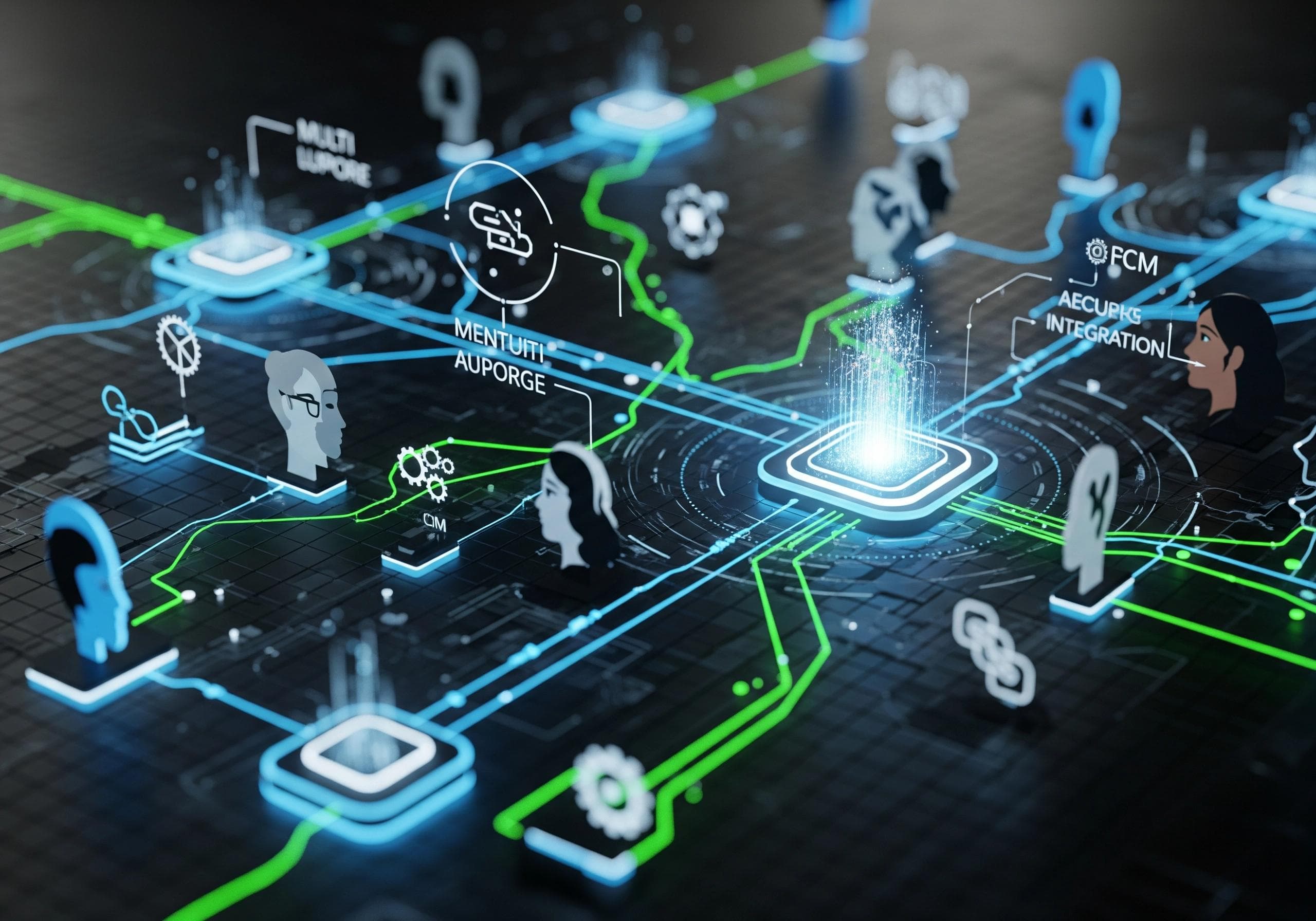
The landscape of business communication is rapidly transforming, moving far beyond basic automated responses. By 2026, the capabilities defining an advanced AI receptionist system are nothing short of revolutionary, marking a significant leap from previous generations. These systems are no longer just answering calls; they are proactively managing complex interactions and executing multi-step workflows with human-like precision.
One of the most immediate benefits businesses experience is the profound expansion of reach. Modern AI models support over 40 languages, allowing companies to serve a global customer base without language barriers. Beyond mere translation, these advanced AI virtual receptionist systems feature emotion detection, recognizing nuances like frustration or urgency in a caller's voice. This allows for empathetic routing or tailored responses, ensuring every interaction is handled with appropriate care.
True intelligence in an AI receptionist means understanding not just words, but intent and emotion.
Seamless integration is another cornerstone of 2026 AI receptionists. These systems effortlessly connect with existing Customer Relationship Management (CRM) platforms, calendars, and other essential business tools. This connectivity enables them to perform tasks autonomously, from booking appointments and updating client records to qualifying leads and even processing transactions without human intervention. This shift significantly streamlines operations and reduces administrative burdens.
What truly sets these next-generation systems apart is the emergence of agentic AI. This isn't just a chatbot following a script; it’s an intelligent entity capable of executing multi-step workflows. Imagine an AI voice agent that can not only schedule a meeting but also send follow-up confirmations, update the CRM, and notify the relevant team member,all as part of a single, autonomous process. This proactive capability is what makes solutions from providers like AI Placers so impactful.
Driving this natural interaction is the advent of real-time APIs, which have drastically reduced response latency to between 420-600 milliseconds. This almost instantaneous processing eliminates awkward delays, making conversations feel fluid and genuinely natural. For businesses seeking a powerful AI receptionist that can transform their customer interactions and operational efficiency, exploring the capabilities offered by platforms with no-code setup and extensive multilingual support is essential.
How Do You Implement an AI Receptionist for Optimal Business Readiness?
The transition to an AI receptionist marks a significant strategic shift, moving businesses from reactive call handling to proactive, intelligent customer engagement. For optimal business readiness, the key lies in understanding the practicalities of implementation, from swift setup to navigating complex regulations.
Streamlined Deployment and Integration
Modern AI solutions have drastically simplified the deployment process. Platforms like AI Placers prioritize a no-code setup, enabling businesses to launch their AI voice agents in days rather than weeks. This agility is critical, especially given that 56% of businesses plan to implement AI receptionists by 2026.
Seamless integration with your existing CRM, calendar, and other business systems is paramount. This allows the AI receptionist to autonomously book appointments, qualify leads, and update customer records, transforming a standalone tool into a core operational asset. AI Placers specifically offers robust integrations to ensure your new AI agent works in harmony with your current infrastructure, enhancing customer service automation without disrupting workflow.
Ensuring Continuous Support and Evolution
Beyond initial setup, optimal business readiness demands a commitment to ongoing support and iterative improvement. Leading AI providers offer continuous updates, performance analytics, and dedicated assistance to ensure your AI receptionist evolves with your business needs. This includes refining conversation flows, adapting to new service offerings, and leveraging real-time reporting to maximize efficiency and customer satisfaction. The aim is to ensure the AI agent consistently delivers on its promise of 24/7 efficiency.
Navigating the Evolving Regulatory Landscape
As businesses increasingly adopt AI, understanding the regulatory environment becomes non-negotiable. The EU AI Act, for instance, becomes fully applicable in August 2026, imposing strict governance and transparency requirements for high-risk AI systems. Businesses must prioritize solutions that offer robust GDPR compliance and transparent data handling.
Choosing a provider like AI Placers that explicitly addresses data privacy and regulatory adherence is crucial for long-term operational security. Their commitment to ethical AI ensures your AI receptionist not only enhances operations but also maintains legal and ethical integrity, preparing your business for future compliance challenges. Understanding how your chosen voice AI platform manages data privacy is as important as its technical capabilities.
Are You Ready to Transform Your Business with AI Receptionists?

The transformation in business communication is upon us. The AI receptionist, once futuristic, is now essential for competitive advantage. The $4.64 billion AI virtual receptionist market, projected by 2026, confirms this isn't a trend; it's the inevitable future of business.
AI receptionists dramatically cut operational costs,by 62% to 85% compared to human staff. Directly reclaiming lost opportunities, 62% of small business calls currently go unanswered. AI agents capture every interaction, transforming potential losses into revenue.
Customer experience benefits. Offering 24/7 availability and zero hold times, AI agents meet the modern demand for immediacy, preferred by 89%. In hybrid models, these smart office solutions achieve 92% customer satisfaction, handling routine tasks and empowering human teams.
Today's 2026 models are sophisticated agentic systems. They support over 40 languages, detect emotion, and integrate seamlessly with CRMs for autonomous booking and lead qualification. This shift to agentic AI, executing multi-step workflows, signals a new era of efficient operations.
The question is no longer if to adopt an AI receptionist, but when and how. Businesses embracing this technology will lead, recovering lost revenue and enhancing loyalty. At AI Placers, we provide human-sounding AI voice agents with no-code setup for rapid deployment and seamless integration.
Assess your business readiness. Implement transformative AI receptionist solutions with AI Placers to secure your place in the future of business.
Ready to future-proof your business with intelligent call handling? Discover how AI Placers can automate your customer interactions and boost efficiency.
Frequently Asked Questions about AI Receptionists
What is an AI receptionist and how does it differ from a traditional receptionist?
An AI receptionist is an artificial intelligence-powered system designed to handle incoming calls and manage basic administrative tasks, much like a human receptionist. However, AI receptionists offer 24/7 availability, instant responses, and can handle a much higher volume of calls simultaneously without hold times, significantly improving efficiency and customer satisfaction.
How much does an AI receptionist typically cost a business?
The cost of an AI receptionist is significantly lower than that of a human receptionist. While a human receptionist can cost between $35,000 to $70,000 annually, AI solutions typically range from $50 to $300 per month, offering substantial cost savings and a high return on investment.
Can AI receptionists handle calls in multiple languages?
Yes, modern AI receptionist systems are equipped to support over 40 languages. This multilingual capability ensures that businesses can cater to a diverse customer base and provide a consistent, high-quality experience regardless of the caller's language.
What kind of ROI can businesses expect from implementing AI receptionists?
Businesses can expect significant ROI through reduced operational costs and recovered revenue from missed calls. AI receptionists can reduce costs by 62-85% and help recover up to $50,000 annually by ensuring no call goes unanswered. The cost per interaction is also drastically lower compared to human agents.
How do AI receptionists improve customer experience?
AI receptionists enhance customer experience by providing immediate responses, eliminating hold times, and offering 24/7 availability. Advanced features like emotion detection allow for more empathetic interactions, and seamless integration with CRMs ensures efficient handling of inquiries and appointments, leading to higher customer satisfaction rates.
Is it difficult to implement an AI receptionist system?
Implementing an AI receptionist is becoming increasingly streamlined, especially with no-code platforms. Solutions like those offered by AI Placers focus on easy integration with existing CRM and calendar systems, simplifying deployment and ensuring businesses can quickly leverage the benefits without extensive technical expertise.