Beyond Basic Answering: A 2026 Look at What Your AI Receptionist Can Achieve
Explore the advanced capabilities of AI receptionists in 2026, moving far beyond simple call answering. Discover how these intelligent AI calling agents can revolutionize business efficiency, enhance customer experiences, and provide a critical competitive advantage in today's fast-paced market.

Beyond Basic Answering: A 2026 Look at What Your AI Receptionist Can Achieve
This article explores what an AI receptionist can truly achieve in 2026, moving far beyond simple call answering. It delves into why businesses must adopt these advanced AI calling agents to maintain a competitive edge, boost business efficiency, and enhance customer experience in a 'zero-wait' world. Learn how next-generation AI voice agents leverage hyper-personalization, intelligent scheduling, and seamless integration to transform your operations, free human staff for high-value tasks, and ensure every customer interaction is captured and optimized.
What Does "Beyond Basic Answering" Truly Mean for AI Receptionists in 2026?

The phrase "basic answering" used to define automated phone systems, conjuring images of rigid Interactive Voice Response (IVR) menus and frustrating wait times. But in 2026, the landscape of automated communication has radically transformed. We're witnessing a paradigm shift where an AI receptionist moves far beyond simply routing calls or playing pre-recorded messages.
Today's sophisticated AI voice agent is a dynamic, intelligent entity powered by advanced Large Language Models (LLMs). This evolution is not just incremental; it’s a fundamental change that's driving the global conversational AI market to an estimated $30 billion by 2028. Businesses are no longer just considering automation; they are actively deploying AI solutions that reduce operational costs by 60-80% compared to traditional staffing.
Modern AI receptionists provide seamless, human-like interactions with sub-500ms latency.
What does "beyond basic answering" truly entail for an AI virtual receptionist? It means an AI that understands context, handles complex inquiries, and even anticipates caller needs, much like a seasoned human assistant. This capability ensures that 65% of customers who prefer self-service for routine tasks find their interactions smooth and efficient. It also means a significant increase in lead capture, with many businesses reporting a 30% boost by eliminating missed calls, especially during off-hours.
Companies like AI Placers are at the forefront of this revolution, offering AI voice agents that seamlessly integrate into existing workflows, ensuring no-code setup and multilingual support for enhanced customer experience. For a deeper dive into how this transformation impacts your business, explore whether "Is Your Business Ready for AI Receptionists? Essential Insights for 2026" and "Boost Productivity: How an AI Virtual Receptionist Can Transform Your Office in 2026" can elevate your operations. This new generation of AI virtual receptionists isn't just an answering service; it's a vital administrative hub, redefining what’s possible in automated customer interaction.
How Have AI Receptionists Evolved Beyond Simple Call Answering?
The notion of an AI receptionist has transformed dramatically from the basic Interactive Voice Response (IVR) systems of the past. What was once a rigid menu of options has evolved into a sophisticated, conversational entity capable of understanding context, nuance, and intent, much like a human operator.
Today's AI calling agent is far more than an answering machine; it's a dynamic administrative hub. We're seeing systems that can perform two-way synchronization with calendars like Google Calendar, Calendly, and Outlook, autonomously managing complex reschedules and cancellations. This level of advanced scheduling eliminates the need for human intervention in routine tasks.
These advancements are primarily driven by LLM-powered agents and breakthroughs in natural language processing (NLP). Modern AI achieves sub-500ms latency, bringing its conversational speed remarkably close to the human average of 200-300ms. This minimal delay is crucial for maintaining a fluid, natural dialogue, making interactions feel seamless rather than robotic.
Seamless interaction is key to customer satisfaction and operational efficiency.
Beyond just understanding words, the latest developments, such as multimodal models, have introduced 'Emotional Intelligence' in voice agents. This allows them to detect caller frustration through sentiment analysis and adjust their tone or even escalate the call to a human manager instantly. This capability ensures that customer experience remains paramount, even in automated interactions.
For businesses looking to automate their office, an advanced AI virtual receptionist can handle an unlimited number of concurrent calls, effectively eradicating wait times and hold queues. This 'Zero-Wait' architecture is a game-changer for businesses, ensuring no call goes unanswered and no lead is missed,a stark contrast to traditional systems that struggle with peak call volumes.
As experts at AI Placers, we've observed that 65% of customers now prefer self-service AI for routine tasks like appointment booking, provided the interaction is seamless and intuitive. This shift underscores the importance of a truly intelligent AI phone receptionist that can manage complex interactions, integrate with CRMs for hyper-personalization, and even handle secure transactions, all while maintaining strict compliance standards like PCI-DSS and HIPAA.
What Hidden Powers Does a 2026 AI Receptionist Wield for Your Business?

The evolution of AI receptionists has ushered in a new era where their capabilities extend far beyond simply answering calls. In 2026, these advanced AI agents wield "hidden powers" that fundamentally transform how businesses interact with their clients, creating a seamless, intelligent, and secure communication hub. We at AI Placers have observed these advancements redefine operational efficiency and customer engagement.
Hyper-Personalization Through CRM Integration
Imagine a caller being greeted by name, with the AI immediately referencing their last purchase or a recent support ticket. This is the reality of hyper-personalization enabled by deep CRM integration. Modern AI receptionists seamlessly connect with systems like Salesforce and HubSpot, accessing real-time customer data to tailor every interaction. This ability to instantly recall context makes every conversation feel genuinely human and highly relevant.
Personalized interactions foster stronger customer relationships and significantly boost satisfaction.
This advanced data access allows the AI to anticipate needs, offer relevant solutions, and guide callers more efficiently, moving beyond generic scripts to truly personalized dialogues.
Advanced Two-Way Scheduling Capabilities
Gone are the days of basic appointment booking. The 2026 AI receptionist leverages advanced scheduling that performs two-way synchronization with popular calendar tools like Google Calendar, Outlook, and Calendly. This means the AI can not only book new appointments but also manage complex rescheduling, cancellations, and send automated reminders without any human intervention. This sophisticated capability ensures optimal resource allocation and reduces no-shows.
Multimodal Communication Continuity
Beyond the voice call, these intelligent agents ensure multimodal continuity across various channels. While still on the phone, an AI can trigger immediate follow-up actions: sending a booking confirmation via SMS, dispatching an invoice via email, or even initiating a live chat session for complex inquiries. This seamless transition between communication modes ensures that no interaction ever feels incomplete or disconnected, a testament to the power of integrating AI voice agents for holistic customer care.
Robust Security and Compliance
For businesses handling sensitive information, security compliance is paramount. Modern AI voice agents are now engineered with robust protocols, increasingly meeting stringent standards like PCI-DSS for secure payment processing and HIPAA for protected health information. This allows businesses, especially in healthcare and financial services, to confidently automate secure payment intake or medical form pre-screening directly over the phone.
These cutting-edge features collectively empower businesses to offer unparalleled customer experiences while drastically improving operational efficiency. For businesses looking to optimize client engagement, understanding how to effectively set up your AI voice agent is crucial for leveraging these hidden powers.
Why Can't Your Business Afford to Miss Out on AI Voice Agents in 2026?
The landscape of business communication is undergoing a profound transformation, making the adoption of advanced AI voice agents not merely an option, but a strategic imperative by 2026. Businesses that hesitate risk being significantly outmaneuvered, losing out on critical leads and compromising customer loyalty in an increasingly AI-driven market.
Gaining a Decisive Competitive Advantage
Modern AI voice agents offer a distinct competitive advantage that traditional systems simply cannot match. While some businesses still rely on basic Interactive Voice Response (IVR), the global conversational AI market is surging towards $30 billion by 2028. This growth signals a clear shift: businesses are moving towards sophisticated, LLM-powered agents that redefine interaction.
Missing out on this technological leap means ceding market share to more agile competitors.
Consider the impact on lead qualification and capture. Statistics show that businesses leveraging AI receptionists experience a significant 30% increase in lead capture by ensuring no call goes unanswered, especially during after-hours. This means every potential customer interaction is maximized, converting more inquiries into tangible opportunities. Our solutions at AI Placers are designed to ensure your business never misses a potential lead, offering robust 24/7 coverage that human teams simply cannot sustain without exorbitant costs.
Elevating Customer Experience and Operational Efficiency
The demand for instant, seamless service is higher than ever. Customers now prefer self-service AI for routine tasks, provided the interaction is smooth and efficient. AI voice agents excel here, delivering consistent, personalized interactions around the clock. By handling unlimited concurrent calls, they effectively eliminate hold times, offering a "Zero-Wait" architecture that drastically improves customer experience.
Beyond customer-facing benefits, these agents drive unparalleled business efficiency AI. They reduce operational costs by an impressive 60-80% compared to traditional 24/7 human staffing, freeing your valuable human employees to focus on complex, strategic tasks that require empathy, critical thinking, and advanced problem-solving. This strategic reallocation of resources empowers your team and optimizes your bottom line.
Embracing AI voice agents is no longer a futuristic concept; it is the present-day reality for sustained growth and superior service. To learn more about how AI Placers can transform your operations, explore our AI receptionist solutions.
How Do AI Receptionists Deliver a "No-Brainer" Return on Investment?
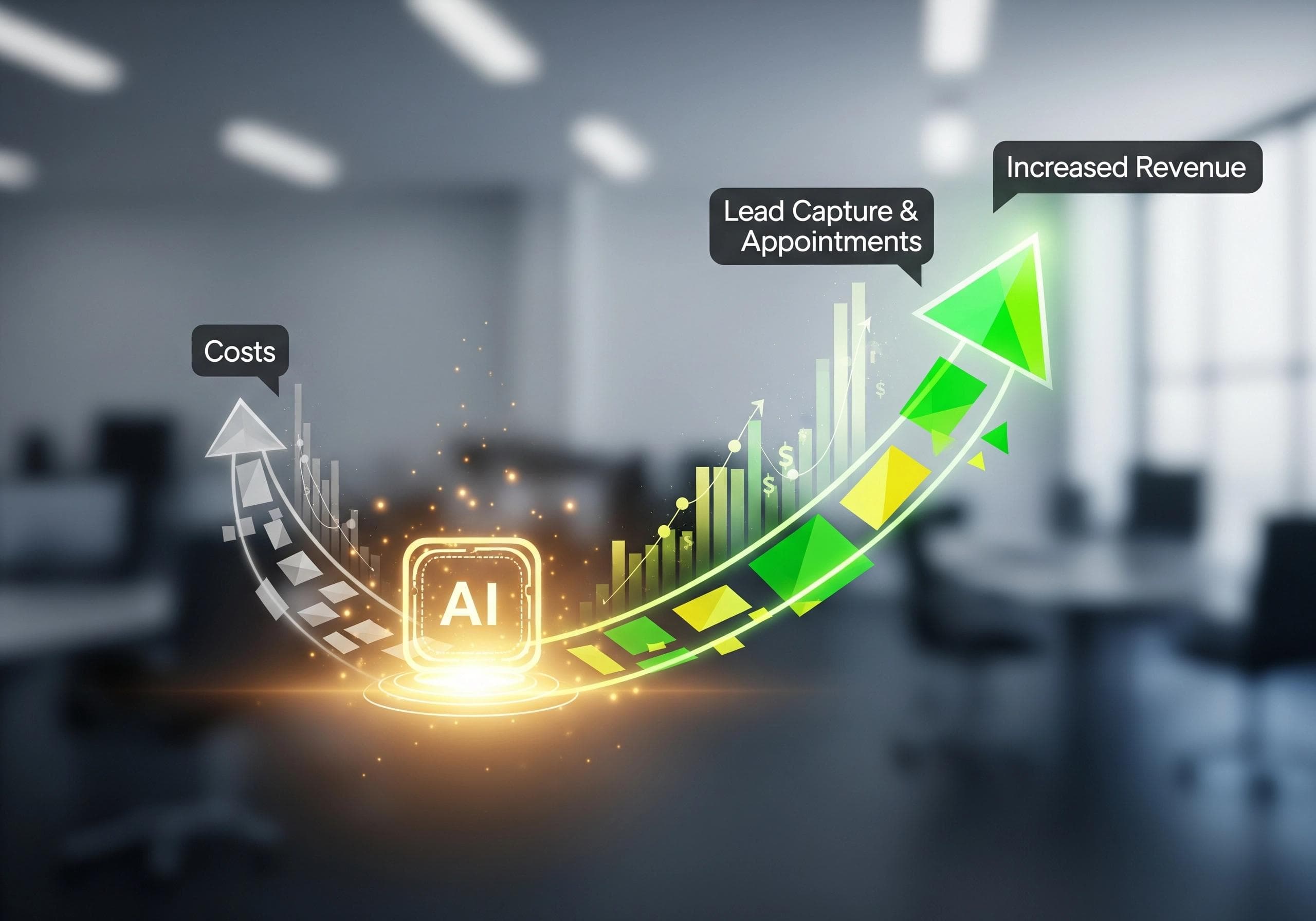
When businesses consider new technology, the ultimate question is always: "What's the return on investment (ROI)?" For modern AI receptionists, the answer is remarkably clear and often substantial. We're not just talking about incremental improvements; we're seeing a fundamental shift in how businesses manage their operational costs and drive revenue, making them a cornerstone for future success.
One of the most immediate and impactful benefits is significant cost reduction. Traditional 24/7 human staffing is expensive, requiring salaries, benefits, and infrastructure. In stark contrast, AI calling agents typically reduce operational costs by a staggering 60-80% compared to traditional 24/7 human staffing. This isn't just a theoretical saving; it's a tangible cut to overhead that directly impacts your bottom line, freeing up resources for growth.
Beyond cutting expenses, AI receptionists are powerful revenue generators. Businesses frequently report a 30% increase in lead capture simply by eliminating missed calls, especially during after-hours. Every unanswered call is a lost opportunity, a potential customer diverted to a competitor. An AI voice agent ensures every inquiry is handled promptly, turning passive interest into active leads and preventing revenue loss.
Consider the power of advanced appointment booking AI. With 65% of customers now preferring self-service AI for routine tasks like scheduling, a seamless booking experience is crucial. Modern AI receptionists integrate with popular calendars, allowing callers to book, reschedule, or cancel appointments instantly without human intervention. This capability not only boosts operational efficiency but also significantly increases conversion rates for essential services.
The combined effect of reduced costs, increased lead capture, and optimized customer interactions makes the ROI of AI receptionists a truly "no-brainer" decision for forward-thinking businesses. Investing in these solutions provides a clear, measurable financial advantage.
What Are the Practical Steps to Implementing a Smart AI Caller Solution?
Implementing a smart AI caller solution might seem daunting, but with a structured approach, it becomes a clear path to enhanced operational efficiency. The journey from a traditional call center to an advanced AI voice agent system involves several practical steps, focusing on strategic planning, seamless integration, and continuous refinement.
The AI Caller Implementation Blueprint
Our experience at AI Placers shows that successful AI setup hinges on a clear, phased strategy. It's not just about flipping a switch; it’s about carefully integrating a sophisticated tool into your existing ecosystem to deliver maximum value.
1. Define Your Objectives and Use Cases
Before diving into technology, clarify what you want your AI receptionist to achieve. Are you aiming to reduce wait times, automate appointment scheduling, or improve lead qualification? Understanding these goals will dictate the AI's script, capabilities, and necessary integration points. We often see businesses prioritize 24/7 availability and instant customer support as initial key drivers.
A well-defined objective is the bedrock of any successful AI deployment.
2. Platform Selection and Initial AI Setup
Choosing the right platform is critical. Look for solutions that offer a no-code setup and robust conversational AI capabilities. Platforms like AI Placers allow businesses to deploy AI voice agents with ease, focusing on natural language understanding and human-like interactions. During this phase, you'll configure the AI's persona, initial scripts, and decision trees based on your defined objectives.
3. Seamless Integration with Existing Systems
One of the most vital steps is ensuring the AI caller integrates effortlessly with your current business tools. This includes CRM systems (like Salesforce or HubSpot), calendar applications (Google Calendar, Outlook), and ticketing platforms. This integration allows the AI to access customer history, update schedules, and log interactions, creating a truly unified experience.
True AI efficiency comes from its ability to talk to your other systems.
4. Training, Testing, and Iterative Refinement
Once the initial AI setup is complete, the training begins. Feed the AI with common customer queries, specific terminology, and desired responses. Conduct thorough testing with internal teams, simulating various scenarios to identify and rectify any conversational gaps. This iterative process of training and testing is key to achieving sub-500ms latency and a truly seamless customer experience.
5. Ongoing AI Management and Optimization
Implementation is not a one-time event; it's a continuous cycle. Regular AI management involves monitoring performance analytics, reviewing call transcripts, and updating the AI's knowledge base as your business evolves. This ensures the AI remains effective, adapts to new challenges, and consistently delivers a high-quality service. For more insights on optimizing call handling, explore our guide on optimizing client calls.
Will Your AI Receptionist Lead Your Business into the Future?

The question isn't whether AI will shape the future of business communication, but how swiftly your organization will integrate it. We've seen how modern AI receptionists have moved far beyond simple call answering, transforming into sophisticated administrative hubs capable of intricate tasks, hyper-personalization, and seamless multimodal continuity.
Embracing the Inevitable: The AI Future
Businesses are at a pivotal moment. The global conversational AI market is set to reach approximately $30 billion by 2028, a clear indicator of a massive shift in how companies interact with their customers. This isn't just about efficiency; it's about redefining customer experience and operational agility.
True innovation stems from anticipating change and adapting proactively.
Advanced AI voice agents today offer sub-500ms latency, making conversations feel remarkably human-like. This technological leap means your AI receptionist isn't just a cost-saving measure,though reducing operational costs by 60-80% is significant,it's a strategic asset for sustained business growth.
Driving Innovation Through AI Adoption
Consider the impact: 65% of customers now prefer self-service AI for routine tasks, provided the interaction is seamless. This preference underscores the necessity for robust AI adoption strategies. Businesses utilizing AI receptionists report a 30% increase in lead capture, simply by ensuring no call goes unanswered, even after hours.
This isn't just about keeping up; it's about leading.
By leveraging AI for tasks like advanced scheduling, secure payment processing, and sentiment-aware interactions, your business paves the way for continuous innovation. Companies like AI Placers provide these cutting-edge AI voice agents, making it straightforward to implement solutions that sound human, enhance customer satisfaction, and drive significant ROI through a no-code setup and seamless integrations. The future of business communication is here, and it's powered by intelligent AI.
Ready to transform your business with a cutting-edge AI receptionist? Discover the future of automated communication and unparalleled customer service at AI Placers.
People Also Ask
What distinguishes a 2026 AI receptionist from older systems?
A 2026 AI receptionist goes far beyond basic call answering. It leverages advanced LLM capabilities for hyper-personalization, intelligent two-way scheduling, and multimodal communication. These agents can integrate with CRMs, analyze caller sentiment, and handle unlimited concurrent calls, offering a near-human conversational experience.
How can an AI receptionist improve business efficiency?
AI receptionists significantly boost efficiency by automating routine tasks like appointment booking, rescheduling, and answering frequently asked questions. This frees up human staff for more complex duties, reduces operational costs by up to 80%, and ensures 24/7 availability, minimizing missed opportunities and improving overall workflow.
What is 'Zero-Wait' architecture in AI receptionists?
'Zero-Wait' architecture means AI receptionists can handle an unlimited number of calls simultaneously without putting callers on hold. This ensures every customer interaction is immediate and seamless, drastically improving customer satisfaction and eliminating the frustration associated with traditional queue systems.
Can AI receptionists handle sensitive information like payments or medical data?
Yes, modern AI receptionists are increasingly designed with robust security and compliance features. Many are PCI-DSS and HIPAA compliant, enabling them to securely process payments and handle sensitive medical intake information directly over the phone, ensuring data privacy and regulatory adherence.
How does hyper-personalization work with an AI receptionist?
Hyper-personalization is achieved by integrating the AI receptionist with your CRM. The agent can then greet callers by name, reference their past interactions or purchase history, and tailor the conversation accordingly. This creates a more engaging and personalized customer experience, fostering stronger relationships.
What are the benefits of using AI voice agents for lead generation?
AI voice agents enhance lead generation by ensuring no call goes unanswered, even outside business hours. They can capture caller information, qualify leads, and even schedule follow-up calls or appointments, leading to a reported 30% increase in captured leads for businesses.