Seamless Communication: Integrating AI Voice Agents for Your Business in 2026
Explore the transformative power of AI voice agents in redefining business communication for 2026. This article details how these advanced tools offer 24/7 availability, enhance customer experience, and provide a significant competitive advantage. Learn about seamless integration, ROI, and the future of AI in business infrastructure.

Seamless Communication: Integrating AI Voice Agents for Your Business in 2026
What are AI voice agents and why are they becoming indispensable for modern businesses? This article explains how AI-powered phone receptionists provide 24/7 availability, eliminate missed calls, and enhance customer experience with sophisticated conversational AI. Discover the strategic advantages of integrating AI voice technology in 2026, from reducing operational costs and achieving a 150% ROI to transforming front office operations. Learn how to implement these agents seamlessly with existing CRM and calendar systems, ensuring compliance and superior client interactions, to gain a competitive edge and prepare for the future of business communication.
What are AI Voice Agents, and How Do They Redefine Business Communication?

The landscape of business communication is undergoing a profound transformation, moving beyond traditional, often rigid, contact methods. At the forefront of this evolution are AI voice agents, sophisticated software programs designed to engage in natural, human-like conversations over the phone. These aren't your typical Interactive Voice Response (IVR) systems, which often frustrate callers with endless menu options and robotic voices.
Unlike the static, rule-based systems of the past, an AI voice agent leverages advanced artificial intelligence to understand context, process natural language, and respond dynamically. This allows for truly conversational interactions, making them indistinguishable from a human agent to the caller. They are, in essence, an intelligent extension of your team.
Beyond Traditional Call Handling
What truly sets these agents apart is their capacity for complex task execution. While older systems could only route calls or play pre-recorded messages, modern AI voice agents act as intelligent AI phone receptionists. They can perform multi-step lead qualification, directly schedule appointments into calendars like Google or Outlook, and provide detailed customer support, all without human intervention. This ability to handle intricate operations around the clock ensures that businesses never miss an opportunity, eliminating the 27 percent of calls that typically go unanswered in small businesses.
AI voice agents deliver near-instant, human-like responses, enhancing customer satisfaction.
Businesses are rapidly recognizing this shift. By 2026, it's estimated that 80 percent of businesses plan to integrate AI-driven voice technology into their customer service, with 10 percent of all agent interactions expected to be fully automated. This isn't just about efficiency; it's about elevating the customer experience. AI Placers, for instance, provides solutions that sound remarkably human, offering a no-code setup for businesses looking to enhance their automated calls and streamline operations.
Embracing an AI virtual receptionist means your business can operate 24/7, providing consistent, high-quality service. The global Voice AI agents market is poised for significant growth, projected to reach 8.81 billion dollars by 2026, demonstrating the widespread adoption and proven benefits. This investment typically yields a 150 percent return on investment in the first year alone, significantly reducing operational costs by 20 to 30 percent.
For a deeper dive into how these intelligent systems are transforming front office operations, consider exploring the impact of an AI phone receptionist. This shift from basic automation to sophisticated, emotionally intelligent interactions redefines what's possible in client engagement.
Why Are AI Voice Agents Your Competitive Edge in 2026?
By 2026, the landscape of business communication will be irrevocably reshaped, and AI voice agents will be at the forefront, defining competitive advantage. The global Voice AI agents market is projected to reach an estimated $8.81 billion by 2026, underscoring a clear market imperative for adoption. This isn't just about automation; it's about strategic positioning in an increasingly digital world, driven by tangible returns and enhanced client experience.
Businesses planning to integrate AI-driven voice technology into customer service by 2026 represent a staggering 80 percent of the market. This isn't a trend; it's a fundamental shift. Implementing this 2026 technology typically yields a remarkable 150 percent return on investment in the first year alone, while simultaneously reducing operational costs by 20 to 30 percent.
Transforming Business Communication and Client Experience
One of the most immediate benefits is the ability to maintain continuous engagement. For small businesses, an AI virtual receptionist eliminates the frustrating 27 percent of calls that typically go unanswered, ensuring no lead is missed. These advanced agents are available 24/7/365, actively capturing leads and performing complex tasks like multi-step qualification and direct appointment scheduling into calendars such as Google or Outlook.
Modern AI voice agents deliver near-instant, human-like responses with latency below 500 milliseconds.
Enhancing client experience is paramount. Our solutions at AI Placers empower businesses to offer superior service through emotionally intelligent AI, capable of detecting sentiment and frustration in real-time. This allows for proactive, empathetic interactions that build stronger customer relationships. Furthermore, integrating these agents with CRM systems like Salesforce and HubSpot provides automatic data syncing and call summarization, offering invaluable analytics for management.
Scaling Operations with Advanced 2026 Technology
The scalability offered by AI voice agents is unmatched. With multilingual support now extending to over 50 languages, businesses can expand their reach globally without the need for localized human staff. This allows for seamless international business communication, a critical factor for competitive growth.
To truly boost customer care, understanding the capabilities of a 2026 AI voice agent is essential. These systems are no longer basic; they are sophisticated communication hubs. Gartner predicts that by the end of 2026, 40 percent of enterprise applications will embed task-specific AI agents, a testament to their growing indispensability. The evolution towards Hybrid Voice AI architecture, prioritizing on-device processing, also signals a commitment to privacy and reduced cloud dependency, making these solutions more robust and secure.
How Can AI Voice Agents Transform Your Front Office Operations?

The modern front office is no longer a static reception desk; it’s a dynamic hub of communication, and AI voice agents are rapidly becoming its core. Businesses are actively seeking solutions that move beyond traditional interactive voice response (IVR) systems, which often frustrate callers, towards intelligent automation that enhances every client interaction. This shift is critical, especially when considering that by 2026, 80 percent of businesses plan to integrate AI-driven voice technology into customer service.
Seamless Call Management and 24/7 Availability
One of the most immediate transformations an AI receptionist brings is ensuring no call goes unanswered. For small businesses, where up to 27 percent of calls might typically be missed, an AI solution captures every inquiry, 24/7, 365 days a year. This constant availability means potential clients always receive a response, fostering immediate engagement.
Never miss a lead again: AI ensures continuous client interaction.
These sophisticated AI calling agent systems don't just answer; they actively manage calls. They can triage inbound queries, provide instant answers to frequently asked questions, and even handle complex, multi-step scenarios, freeing human staff for more nuanced tasks. The goal is to provide a seamless, human-like experience with latency levels now below 500 milliseconds, ensuring near-instantaneous responses.
Advanced Lead Qualification and Appointment Scheduling
Beyond basic answering services, AI voice agents excel at critical front office functions like lead qualification. They engage prospects in natural conversations, asking targeted questions to gather necessary information and determine their needs. This data is then automatically synced with CRM systems like Salesforce or HubSpot, providing sales teams with pre-qualified leads.
Think about the efficiency gained when an AI can not only qualify a lead but also directly schedule appointments into your team's Google or Outlook calendars. This automation eliminates manual back-and-forth, streamlines the sales funnel, and ensures that valuable time is spent on productive interactions.
Enhancing Client Experience and Emergency Handling
Modern AI voice agents dramatically elevate the client experience. With features like emotional intelligence, they can detect sentiment, tone, and even frustration in real-time, allowing them to adapt their responses and de-escalate situations. This empathetic approach ensures callers feel heard and valued, fostering stronger client relationships.
In critical situations, the AI doesn't falter. It's programmed to recognize urgent keywords and phrases, immediately routing emergency calls to the appropriate human personnel or designated emergency services. This intelligent routing ensures safety and responsiveness, a stark contrast to older systems that might leave callers navigating complex menus. To understand more about how these agents enhance service, explore Mastering Call Handling: 5 Ways an AI Receptionist Enhances Service in 2026.
Deploying an AI voice agent from a platform like AI Placers translates directly into tangible benefits. Businesses are seeing a 150 percent return on investment in the first year and a reduction in operational costs by 20 to 30 percent. This clearly demonstrates the financial and operational advantages of integrating advanced AI into your front office operations.
What Strategic Practices Ensure Successful AI Voice Technology Implementation?
Implementing AI voice technology isn't merely about plugging in a new tool; it demands a strategic approach to ensure seamless integration, robust data management, and adherence to evolving regulatory standards. Businesses that overlook these critical practices risk undermining the very benefits they seek, such as the projected 150 percent ROI in the first year or the 20 to 30 percent reduction in operational costs.
Technical Integration with Existing Infrastructure
The first strategic pillar involves achieving a smooth integration with your current operational systems. An effective AI virtual receptionist must interact effortlessly with your CRM systems like Salesforce or HubSpot, calendar applications, and other business communication platforms. This isn't just about data transfer; it's about creating a unified ecosystem where the AI agent acts as a natural extension of your team.
True value comes from systems that speak to each other, not just alongside each other.
Platforms such as AI Placers are designed with this in mind, offering a no-code setup that simplifies deployment and ensures compatibility without complex IT overhauls. This approach enables automatic call summarization and real-time data syncing, turning every interaction into actionable intelligence for management.
Prioritizing Data Synchronization and Security
Beyond initial integration, continuous data synchronization is paramount. Your AI voice agents must consistently exchange information with your core databases to maintain accurate customer profiles, track interactions, and personalize responses. This real-time flow ensures that every agent interaction, whether it's lead qualification or appointment scheduling, updates your records instantly.
Data security is non-negotiable. Modern AI solutions should offer robust encryption and access controls to protect sensitive customer information. This ensures that while interactions are efficient, they are also secure.
Navigating Compliance and Ethical AI Use
With the rapid advancements in AI, compliance has become a central concern. The FCC's recent classification of AI-generated voices as artificial under the Telephone Consumer Protection Act means that unauthorized AI robocalls are illegal, requiring explicit consumer consent for business use. Businesses must be diligent in obtaining and documenting this consent.
Staying compliant protects your brand and fosters trust with your customers.
Beyond federal regulations, adherence to data privacy laws like GDPR and HIPAA is essential, particularly for sectors like healthcare and finance. When selecting an AI virtual receptionist, ensure the platform provides features and guidelines that support these regulatory frameworks, mitigating potential legal risks and upholding ethical AI voice compliance standards. AI Placers is committed to designing solutions that address these critical requirements, helping businesses operate confidently within the legal landscape.
Can AI Voice Agents Truly Deliver a Superior Client Experience?

The question of whether AI voice agents can truly elevate the client experience is no longer hypothetical; it's a demonstrable reality for businesses leveraging advanced conversational AI. Traditional call systems often leave customers frustrated by rigid menus and impersonal interactions. Today, the shift is towards dynamic, empathetic engagements that redefine customer satisfaction.
The Power of Emotional Intelligence in AI Interactions
Modern AI voice agents are engineered with sophisticated emotional intelligence, allowing them to detect sentiment, tone, and even frustration in real-time during conversations. This capability enables the AI to adapt its responses, offering a more supportive and understanding interaction that mirrors human empathy. It's about moving beyond simple keyword recognition to truly understanding the caller's state, leading to a significantly improved client experience.
Understanding caller sentiment is a game-changer for customer satisfaction.
Hyper-Personalization Through Data Integration
One of the most compelling advantages of AI voice agents is their ability to deliver hyper-personalization. By integrating seamlessly with CRM systems like Salesforce and HubSpot, these agents access a comprehensive view of each client's history, preferences, and previous interactions. This allows for truly tailored conversations, where the AI virtual receptionist can address specific needs, reference past queries, and offer relevant solutions instantly. This level of personalized service was once the exclusive domain of highly trained human agents, but now, AI makes it scalable and consistent.
Real-time Responsiveness and Global Reach
The speed and efficiency of AI voice agents dramatically enhance the client journey. With latency levels now consistently below 500 milliseconds, responses are near-instantaneous, eliminating frustrating delays. This real-time capability ensures issues are addressed promptly, reducing resolution times and boosting satisfaction. Moreover, AI phone receptionist technology offers robust multilingual support, now extending to over 50 languages. This global reach allows businesses to serve diverse client bases without the need for localized human staff, opening new markets and ensuring every customer feels understood, regardless of language.
Businesses are rapidly recognizing this potential; by 2026, an estimated 80 percent plan to integrate AI-driven voice technology into their customer service, driven by the desire for superior interactions and operational efficiency. Solutions like those from AI Placers exemplify how a no-code setup, combined with advanced features, makes this level of sophisticated client engagement accessible to businesses of all sizes, ensuring every call contributes positively to the overall client experience.
What Does the Future Hold for AI Voice Agents and Business Infrastructure?
The evolution of the AI voice agent is accelerating beyond simple query responses, rapidly reshaping the landscape of business communication. We're witnessing a pivotal shift where these intelligent systems are no longer just tools, but foundational elements of modern business infrastructure.
The Rise of Hybrid Architectures and Enhanced Privacy
The 2026 technology for AI voice agents is characterized by a move towards Hybrid Voice AI architectures. This innovative approach prioritizes on-device processing, significantly enhancing data privacy and reducing reliance on cloud infrastructure. Businesses can expect greater control over sensitive information, a critical factor given increasing regulatory scrutiny.
Indeed, the FCC has officially classified AI-generated voices as artificial under the Telephone Consumer Protection Act, making unauthorized AI robocalls illegal. This emphasizes the need for solutions that are not only advanced but also compliant and transparent, a commitment at the core of platforms like AI Placers.
Continuous Context and Predictive Intelligence
The future of AI voice agents involves capabilities far beyond current interactions. Imagine agents that maintain continuous context across multiple interactions, understanding nuanced conversations over extended periods. This continuous learning enables agents to anticipate client needs and proactively offer solutions, moving from reactive support to predictive assistance.
Predictive analytics will empower AI agents to foresee customer intent. This allows for hyper-personalized experiences, streamlining interactions and drastically improving efficiency. These agents are becoming indispensable for tasks ranging from multi-step lead qualification to complex appointment scheduling, as explored in our guide on optimizing client calls.
Expanding Role and Unprecedented AI Agent Growth
Gartner predicts that by the end of 2026, a significant 40 percent of enterprise applications will embed task-specific AI agents, underscoring their integration into every facet of business operations. The global Voice AI agents market is projected to reach approximately $8.81 billion by 2026, reflecting this incredible AI agent growth.
This expansion signifies a broad acceptance of AI voice agents as crucial for competitive advantage. Companies like AI Placers are at the forefront, providing no-code, multilingual AI voice agents that seamlessly integrate into existing systems, helping businesses scale and enhance customer interactions while remaining compliant and efficient.
Ready to Transform Your Business Communication with AI Voice Agents?
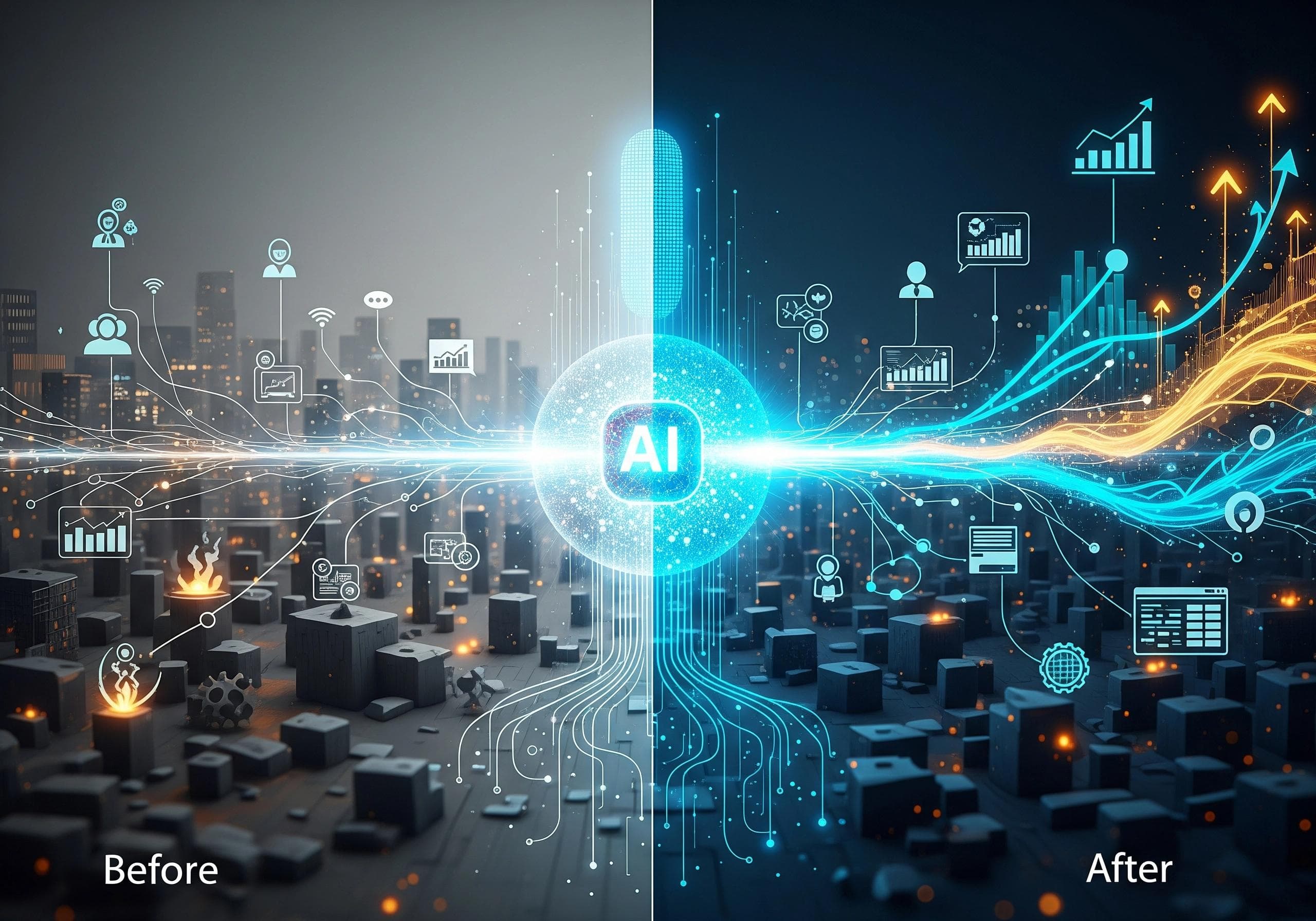
The journey through integrating AI voice agents into your business communication reveals a future where efficiency, customer satisfaction, and strategic growth converge. We've seen how these advanced AI voice agents are not just an upgrade to traditional systems but a fundamental shift, redefining how businesses interact with clients and manage operations.
By 2026, the global market for Voice AI agents is projected to hit approximately $8.81 billion, signaling their indispensable role. Forward-thinking businesses recognize this trend, with 80% planning to integrate AI-driven voice technology into customer service by that same year. This isn't merely about keeping pace; it's about gaining a significant competitive advantage.
AI voice agents deliver substantial returns, offering a 150% ROI in the first year and reducing operational costs by 20 to 30 percent.
From eliminating unanswered calls with an efficient AI receptionist capable of 24/7 lead capture and advanced appointment scheduling, to providing hyper-personalized interactions through emotional intelligence, the benefits are tangible. Supporting over 50 languages and integrating seamlessly with CRM systems further underscores their power to scale globally and enhance data-driven decision-making.
The shift towards Hybrid Voice AI architecture and robust regulatory frameworks, like the FCC's classification of AI-generated voices, ensures secure, compliant, and highly effective deployments. This evolution guarantees AI voice agents will continue to be a cornerstone of modern business infrastructure.
Ready to embrace this transformation? Solutions like those from AI Placers offer a powerful, no-code platform to deploy human-sounding AI voice agents that deliver seamless communication and exceptional customer experience. Explore how an AI phone receptionist can revolutionize your front office or visit us to achieve a true competitive advantage and significantly reduce operational costs.
Ready to enhance your business communication and gain a competitive edge? Discover how AI Placers' no-code AI voice agents can revolutionize your front office operations. Visit AI Placers today!
Frequently Asked Questions about AI Voice Agents
What makes AI voice agents different from traditional IVR systems?
AI voice agents go beyond simple menu-driven interactions of traditional IVR. They utilize advanced natural language processing (NLP) and machine learning to understand context, engage in natural conversations, and perform complex tasks like lead qualification and appointment scheduling, offering a much more human-like interaction.
How can AI voice agents improve client experience and satisfaction?
AI voice agents provide 24/7 availability, ensuring no customer query is missed. They offer instant, consistent responses and can detect sentiment and frustration in real-time, allowing for personalized and efficient handling of inquiries, significantly boosting client satisfaction.
What is the typical ROI for implementing AI voice agents?
Businesses typically see a substantial return on investment, often around 150% in the first year of implementation. This is due to reduced operational costs, increased lead capture, and improved efficiency in handling customer interactions.
Can AI voice agents integrate with existing business systems like CRMs?
Yes, modern AI voice agents are designed for seamless integration with popular CRM systems (like Salesforce and HubSpot) and calendar applications (like Google Calendar and Outlook). This allows for automatic data syncing, call summarization, and direct appointment booking.
Are AI voice agents compliant with privacy regulations like GDPR and HIPAA?
Leading AI voice agent platforms prioritize compliance. They offer features and configurations to meet stringent regulations such as GDPR and HIPAA, ensuring data privacy and security for businesses and their clients. You can learn more about these capabilities at AI Placers.
How many languages can AI voice agents support?
Advanced AI voice agents now support over 50 languages, enabling businesses to scale their operations globally and communicate effectively with a diverse customer base without needing to hire multilingual staff.